La Ventanilla: mangroves and a turtle camp near Mazunte

La Ventanilla is a small community on the Oaxacan coast, a few minutes west of Mazunte, where a river lagoon backs up behind the beach and is lined with mangroves. People from the village run boat tours through those mangroves, look after a crocodile and iguana enclosure, and protect sea turtle nests on the beach. It is one of the easiest ways to see wildlife on this stretch of coast, and it pairs naturally with a day in Mazunte.
This guide covers what the visit is actually like, what you are likely to see, how the turtle camp fits in, and how to plan it from Puerto Escondido.
What is La Ventanilla?
La Ventanilla sits where the Tonameca River meets the Pacific. Most of the year a sand bar separates the river from the sea, so the water spreads into a calm, brackish lagoon surrounded by mangrove forest. The name means "the little window" and comes from a rock formation on the beach with an opening the waves pass through.
Decades ago, many families here lived partly from the turtle trade, like their neighbors in Mazunte. After the 1990 ban on sea turtle hunting in Mexico, the community organized around ecotourism instead: local residents formed a cooperative, replanted mangroves that had been cut, and started taking visitors through the lagoon. That cooperative still runs the visit today, so the money you pay goes to people who live there. If you want the wider story of that change, read how Mazunte went from hunting turtles to protecting them.

The mangrove boat tour
The core of the visit is a ride through the lagoon in a wooden boat steered and pushed along by a local guide with a long pole or paddle. There is no motor, which is part of the appeal: it is quiet, and animals don't scatter before you arrive.
The tour usually lasts around an hour to an hour and a half. You glide along narrow channels under the mangrove roots, out into the more open parts of the lagoon, and usually stop at a small island where the cooperative keeps enclosures. Guides mostly speak Spanish; some know a few words of English, and they are used to pointing things out so everyone can follow.
What you are likely to see
- Crocodiles. American crocodiles live in the lagoon. You often see them resting on the banks or floating with just their eyes above the water. Guides keep a respectful distance, and so should you.
- Iguanas. Green and black iguanas sun themselves in the branches, and there are more in the enclosures on the island.
- Water birds. Herons, egrets, cormorants and kingfishers are common, and in some months the lagoon fills with more species. Early morning is best for birds.
- The mangroves themselves. Several mangrove species grow here, and the guide will usually explain how their roots protect the coast, filter the water and shelter young fish.
Sightings depend on the season, the time of day and luck. Nothing is guaranteed, and you shouldn't trust anyone who promises a particular animal.
The turtle camp at La Ventanilla
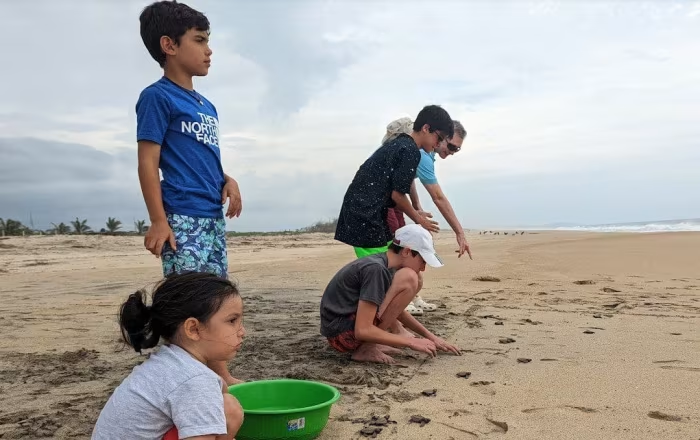
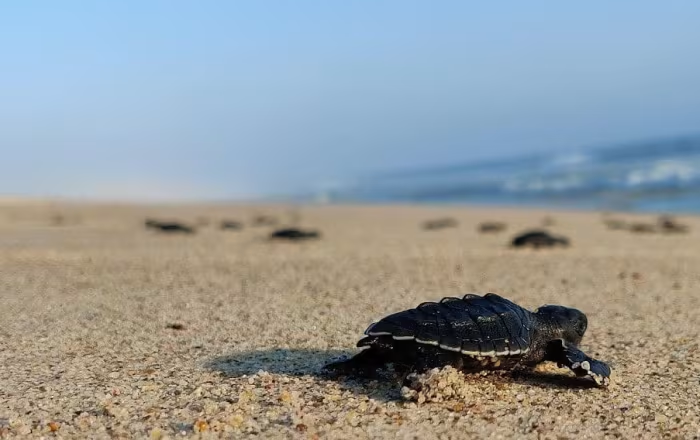
The beach in front of the lagoon is a nesting beach, mostly for olive ridleys, the species you also see at Playa Escobilla. Members of the community patrol it in nesting season, move eggs at risk to a protected hatchery, and release the hatchlings when they emerge. Our guide to the olive ridley turtle explains why this coast matters so much for them.
Whether you can join a release at La Ventanilla depends on what is hatching that week. Nesting on the Oaxacan coast is heaviest in the second half of the year, roughly from summer into winter, so your chances are better then. Ask at the cooperative when you arrive rather than counting on it. If you are curious about how these camps work day to day, from the night patrols to the hatchery, read how sea turtle conservation works near Puerto Escondido.
How much does it cost and how long to plan for
The cooperative sets the prices, and they change over time, so we won't quote a figure that may be out of date. Expect a per-person price for the boat tour, paid in cash on site. Bring small bills, because card payments are not something to rely on there.
Plan on about two hours at La Ventanilla in total: the boat tour, a walk on the beach and a drink at one of the simple places near the entrance. Some visitors add a horse ride along the beach, which locals often offer.
Getting there from Puerto Escondido
La Ventanilla is about an hour to an hour and a quarter east of Puerto Escondido by car on coastal Highway 200, a little before Mazunte. From the coastal road, a signed turnoff leads down a short dirt road to the lagoon. A regular car manages it in the dry season; after heavy rain, drive slowly.
Without a car, take a bus or colectivo toward Pochutla, then a local camioneta or taxi toward Mazunte and ask to be dropped at the Ventanilla turnoff. From Mazunte, a taxi takes only a few minutes. If you are staying in Mazunte or San Agustinillo, it is an easy half-day outing.

Tips for a better visit
- Go in the morning. It is cooler, the light is soft, and the birds are more active.
- Bring cash, water and sunscreen. There is little shade on the open parts of the lagoon. Insect repellent helps near the mangroves, especially toward evening.
- Don't swim in the lagoon. It is crocodile habitat. The open beach also has strong surf, so most visitors don't swim there either.
- Keep your hands in the boat and don't feed animals. It changes their behavior and puts the next group at risk.
- On the beach, respect marked nests. In nesting season, stay away from any fenced or flagged areas and never use a flashlight near turtles at night.
A day trip that combines La Ventanilla and Mazunte
A simple plan that works well: leave Puerto Escondido early, do the mangrove tour at La Ventanilla in the morning, continue a few minutes to Mazunte to see adult turtles at the Turtle Center, have lunch and a swim, and finish with sunset at Punta Cometa. Just remember the Turtle Center is closed on Mondays and Tuesdays. Our guide to the Mexican Turtle Center in Mazunte has the practical details.
If your time is short and you would rather stay close to Puerto Escondido, the turtle release at Playa Escobilla gives you the hatchlings without the long drive: hotel pickup at 4:30 PM, a 30-minute ride to the beach, a visit to the hatchery and a sunset release, back at your hotel by about 7:00 PM. Releases run year-round, depending on what hatched that day.
Is La Ventanilla worth it?
Yes, if you go with the right expectations. It is not a polished attraction. It is a community-run lagoon with wooden boats, simple facilities and guides who grew up there. That is exactly its value: a quiet hour among mangroves and crocodiles, money that stays in the village, and a beach where local people protect turtle nests.
Planning to join a release while you are on the coast? Read our tips for releasing baby sea turtles before you go.