Releasing baby turtles: 8 tips for families and first-timers

The turtle release is one of the easiest tours in Puerto Escondido: we pick you up at 4:30 PM, drive you to the beach and bring you back by about 7:00 PM. A few small things make it even better.
Before you go
- Dress for the beach, plus a layer. Light clothes and sandals for the sand, and a light jacket because the evening breeze off the ocean can be cool.
- Use sunscreen and a hat. The late afternoon sun is still strong at 5 PM.
- Turn off your flash before you arrive. Flash photography is not allowed because it disorients the hatchlings. Do it in the van so you don't forget in the excitement.

On the beach
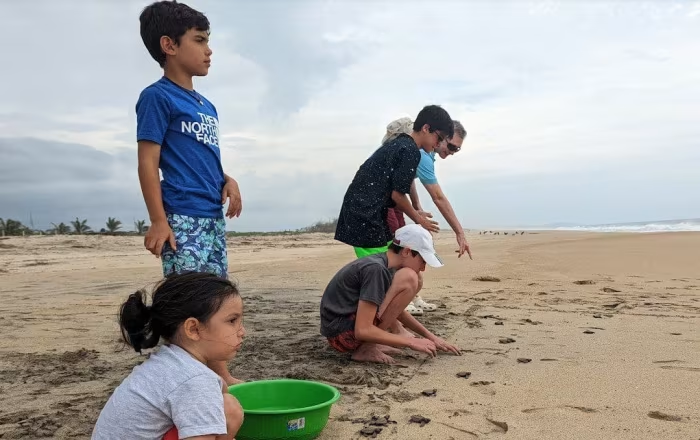
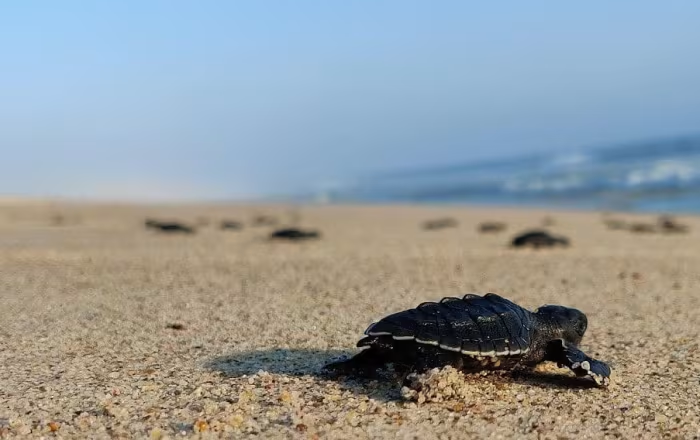
- Get low. The best photos are taken at sand level, from behind the turtles, with the sunset in front of them.
- Let them walk. Place the hatchlings on the sand where the guide tells you and let them crawl to the water on their own. It's part of how they learn their beach.
- Watch where you step. Hatchlings are small, fast and sand-colored.
Traveling with kids
- Prepare them for the moment. Explain beforehand that the turtles are tiny and need gentle hands, and that they shouldn't chase them into the sea. Kids who know the "rules" enjoy it more and become the turtles' protectors. Guides are great with children and explain the life cycle in a way they understand.

Group or private?
- Pick the version that suits you. The group release ($800 MXN per person) takes place at the Playa Escobilla reserve and includes a hatchery visit. The private release ($1,500 MXN per person) gives you your own guide and hatchlings on a secluded, empty beach, and part of the price funds turtle protection. Both need at least 2 people.
Sunset time changes with the season
Pickup is always at 4:30 PM, but the sun keeps its own schedule. In Puerto Escondido it sets around 6 PM from late November to January and closer to 7 PM in June and July. That changes the feel of a release that starts around 5:30 PM:
- Winter months: the release falls close to sunset itself, with low orange light and a quick fade to dusk. The breeze cools things down fast, so the light jacket earns its place.
- Summer months: the sun is still above the horizon during the release, so the light is bright and warm, and you drive back in the last of the glow.
- Rainy season (roughly June to October): afternoons are humid and clouds can build over the coast. A thin rain layer is worth packing, and if the forecast looks stormy, message the team on WhatsApp to ask what to expect.
For what each month means for the turtles themselves, see our turtle season guide, month by month.
Make the most of the hatchery visit
On the group release, the hatchery stop around 5:00 PM is short. Stay close to the guide, walk only where you are shown and never step or lean into the fenced nest area. A few questions usually lead to the best explanations:
- When were these nests laid, and which ones are due to hatch next?
- Why are some nests shaded and others not?
- Where on the beach did these eggs come from, and why were they moved?
- What happens to a nest after the hatchlings have come out?
Knowing the answers turns the release into the last step of a long process rather than a photo moment. To judge any turtle program for yourself, our article on whether turtle releases are ethical lists the signs of a well-run one.
Plan the rest of your day around it
- Be ready a few minutes before 4:30 PM. If you are staying in an Airbnb, send the exact address or a map pin on WhatsApp ahead of time so the driver finds you easily.
- Eat something beforehand. You are back at about 7:00 PM, so a late lunch or an afternoon snack keeps everyone in a good mood. Book dinner for after 7:30 PM.
Good to know
- Releases happen year-round, but the number of hatchlings per person depends on what hatched that day.
- Food and drinks are not included on the private tour, so bring water.
- Solo traveler? Message us on WhatsApp and we'll try to pair you with a group.
Want to understand what you're seeing? Read how turtle conservation works before your tour.