What threatens sea turtles in Oaxaca: lights, plastic and fishing nets
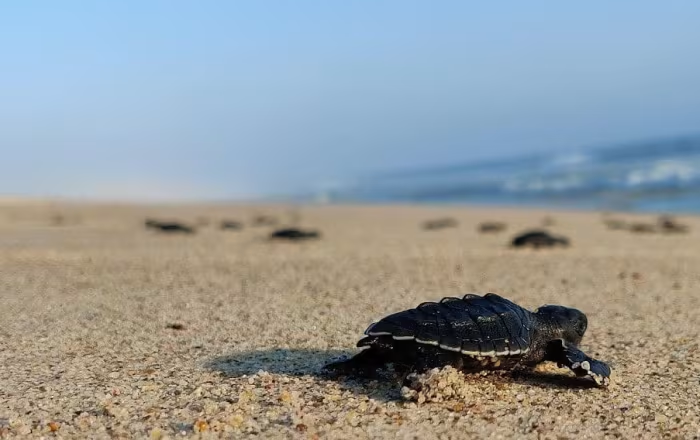
Olive ridleys are still one of the most visible sights on the Oaxacan coast, and in good years the nesting beaches near Puerto Escondido fill with them. That can give the impression that the problem is solved. It isn't. Sea turtles grow slowly, take many years to reach breeding age and lose most of their young long before adulthood, so even small extra losses add up over decades. Here are the main threats they face on this coast, roughly in the order a turtle meets them, and what is being done about each one.
Before hatching: poaching, predators and dogs
A nest is a buried clutch of around a hundred eggs, and for about six to eight weeks it can't move or hide. That makes it the most exposed stage of a turtle's life.
- Egg poaching. Turtle eggs were eaten and sold openly on this coast for generations. Mexico banned the capture of sea turtles and the trade in their eggs in 1990, but illegal collection hasn't disappeared, and eggs are still offered quietly in some places.
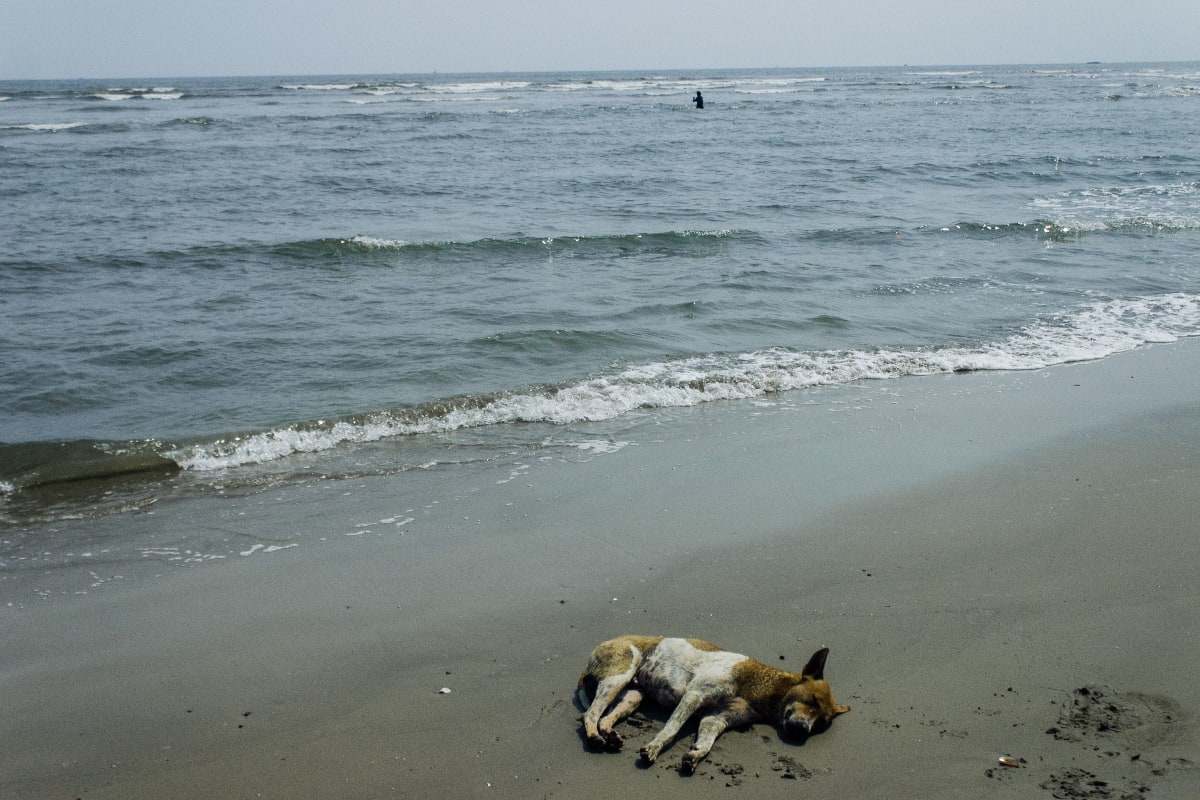
- Dogs and wild animals. Free-roaming dogs, raccoons, coatis, birds and crabs dig up nests or pick off eggs. On a beach near a town, dogs are often the biggest problem.
- Crowding on arribada beaches. During a mass nesting, females arriving later sometimes dig up nests laid a few nights earlier.
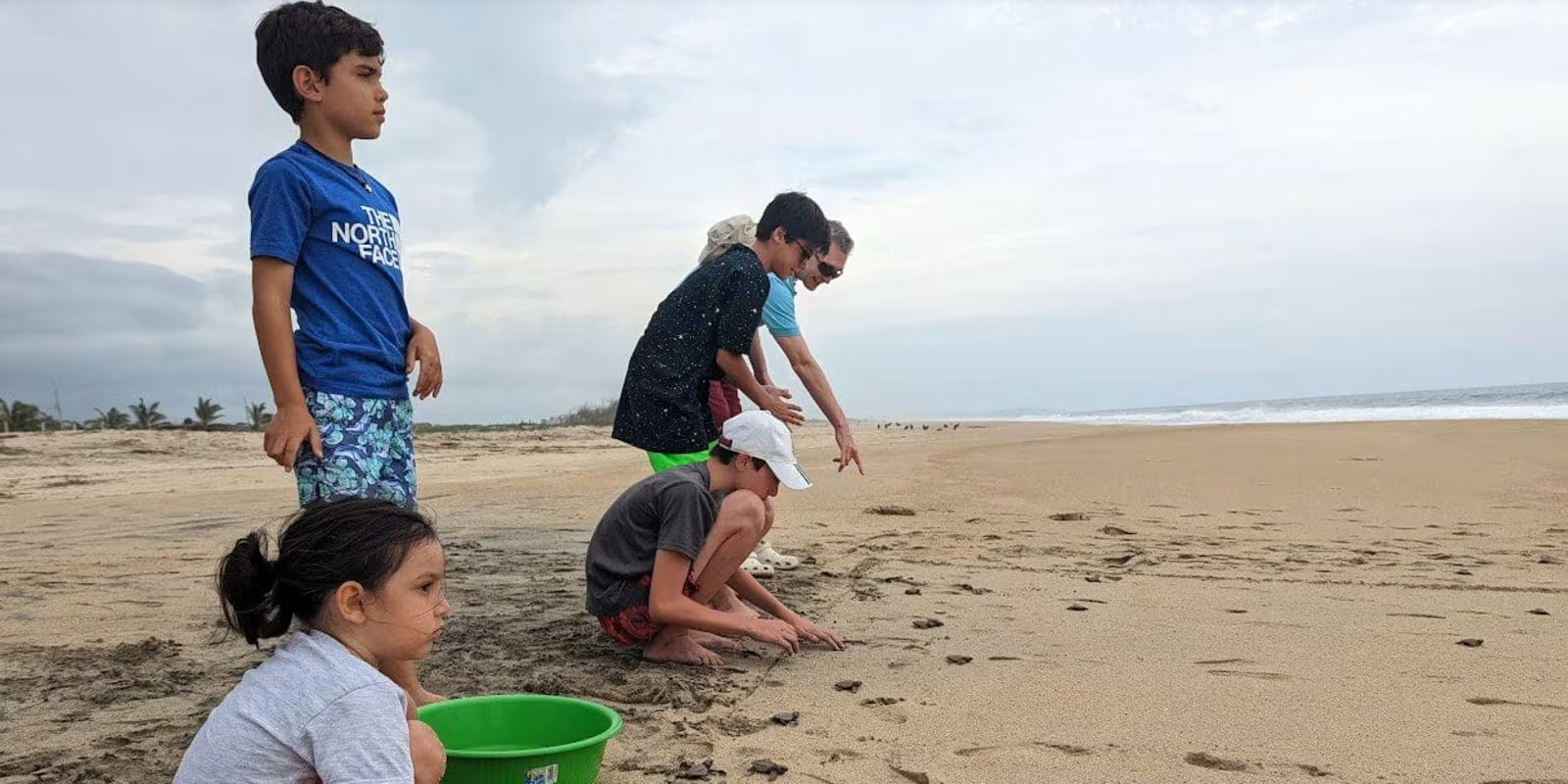
This is why local teams patrol at night and move eggs from the most exposed stretches into fenced hatcheries. Our guide to how turtle conservation works near Puerto Escondido explains that process step by step.
Warming sand and a shrinking beach
The temperature of the sand decides whether a hatchling becomes male or female: warmer nests produce mostly females, and very hot nests may not hatch at all. As beaches heat up, conservation teams on many coasts are watching the balance of the sexes closely, and some shade their hatcheries on the hottest days. We cover the science in detail in inside a turtle nest: incubation and sand temperature.
The beach itself can also disappear. Storm surges, strong swells and erosion wash nests away, and where buildings or walls stand right behind the sand, the beach has nowhere to move back to. Sea level rise makes this worse over time, which is one reason undeveloped stretches of coast matter so much.
Artificial light: the threat you can see from your hotel
Hatchlings leave the nest at night or at dusk and find the sea by heading toward the brightest, lowest horizon, which on a natural beach is the sky over the water. Streetlights, beach bars, hotel floodlights and even phone flashlights can pull them the wrong way, inland toward roads, where they dry out, get eaten or run over. Nesting females also tend to avoid brightly lit beaches.
Light is one of the easiest threats to fix, because it disappears the moment someone switches it off. Shielded, low, warm-colored lights and curtains on windows that face the sand help a great deal. If you stay on a nesting beach, keep your room dark and your phone light pointed down, and never use flash on turtles.
Plastic in the water and on the sand
Plastic affects turtles in two ways. They swallow it, because a drifting bag can look a lot like a jellyfish, and leatherbacks in particular feed almost entirely on jellyfish. Swallowed plastic can block the gut or make a turtle feel full while it starves. They also get tangled in it: packing straps, rope and six-pack rings can wrap around flippers and necks.
On the beach, trash creates obstacles for hatchlings on their short crawl to the sea. Much of the plastic on the Oaxacan coast arrives with rivers after the rains or washes in from the open ocean, so it isn't only a local problem, but every piece picked up on the sand is one fewer in the water.
Fishing nets and hooks: the biggest danger at sea
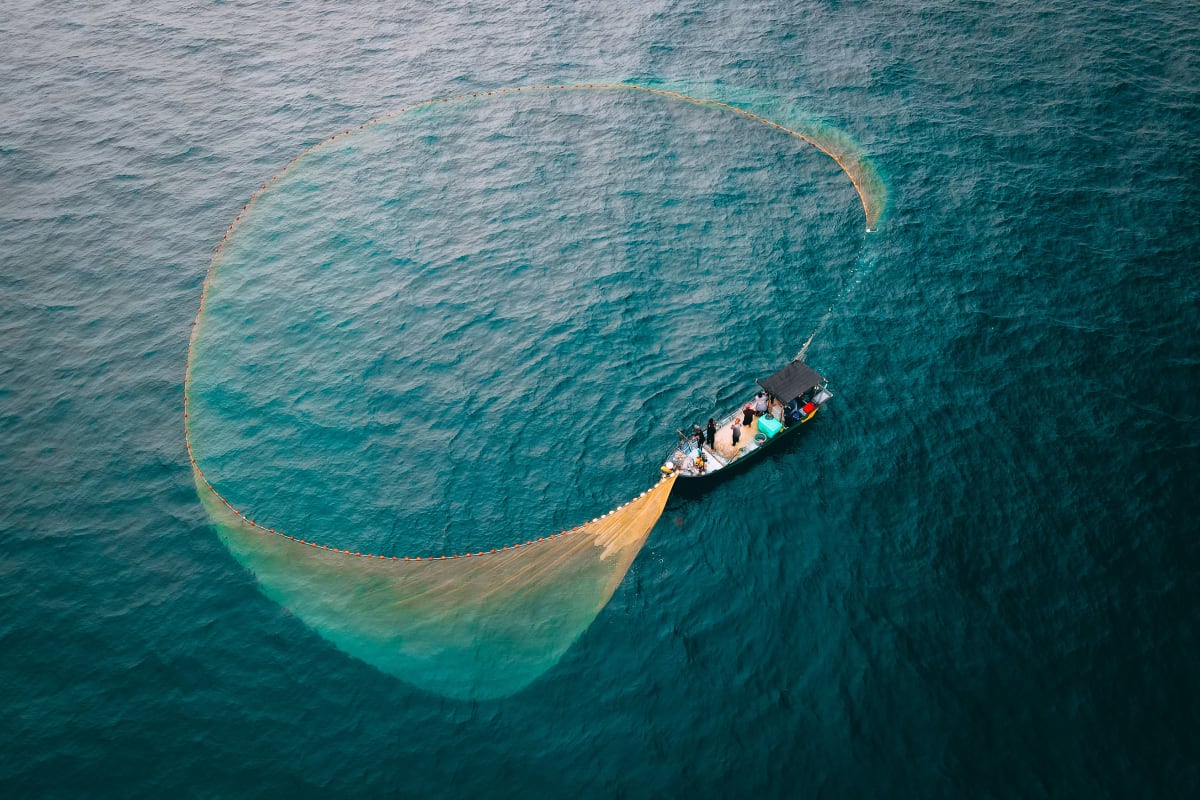
Once they reach the ocean, the most serious human threat for adult and juvenile turtles is bycatch: being caught by accident in fishing gear meant for other species. Turtles breathe air, so a turtle trapped underwater in a net can drown in a short time.
- Gillnets, set close to shore or near river mouths, are a common cause of drowning along the Pacific coast of Mexico.
- Shrimp trawls used to kill large numbers of turtles worldwide. Mexico now requires shrimp trawlers to carry turtle excluder devices, a grid with an escape opening that lets turtles out of the net.
- Longlines, used for tuna, sharks and other large fish, can hook turtles that take the bait.
- Ghost nets, lost or abandoned gear that drifts for months, keep catching turtles long after anyone stops using them.
None of this means local fishermen are the villains. Many of the people who patrol beaches on this coast come from fishing families, and the best results usually come from working with fishing communities, not against them: better gear, safe ways to release turtles caught by accident, and fair rules everyone can follow. For leatherbacks, whose Pacific population has fallen steeply, bycatch at sea is one of the main reasons they are so rare today, as we explain in our post on leatherback turtles in Oaxaca.
Boats, development and the illegal trade
A few other threats complete the picture:
- Boat strikes. Turtles rest and breathe at the surface, and fast boats can hit them, especially near busy bays.
- Coastal development. New buildings bring light, noise, walls and traffic onto beaches that turtles have used for thousands of years. Vehicles driven on the sand compact it and can crush nests or leave ruts that trap hatchlings.
- The trade in turtle products. Meat, eggs and shell items are illegal in Mexico, but demand hasn't vanished. The old turtle slaughterhouse at San Agustinillo, next to Mazunte, closed when the 1990 ban came in, and it shows how completely a local economy can come to depend on turtles, a story we tell in from hunting to protection in Mazunte.
Is the situation getting better?
On this coast, partly yes. The end of commercial hunting, the protection of nesting beaches like La Escobilla and decades of patrols and hatcheries are widely credited with the recovery of olive ridley nesting in Oaxaca. Leatherbacks are a different story, and their numbers remain very low. Both species still face every threat on this list, and most of them, from nets to plastic to warming sand, can't be solved on a single beach.
That is why the work never really stops: night patrols during the season, hatchery care, beach cleanups, dark-sky rules and better fishing gear, all of it carried out mainly by local people with modest budgets.
What you can do about it
As a visitor, you can't change fishing rules, but you can avoid adding to the problem and support the people solving it: keep lights low near the sand, carry your trash out, refuse turtle products of any kind and pay fairly for programs that fund protection. We've gathered the practical details in how travelers can help sea turtles beyond the release, a good next read if you'd like to turn this list into a few simple habits.