How sea turtle conservation works near Puerto Escondido
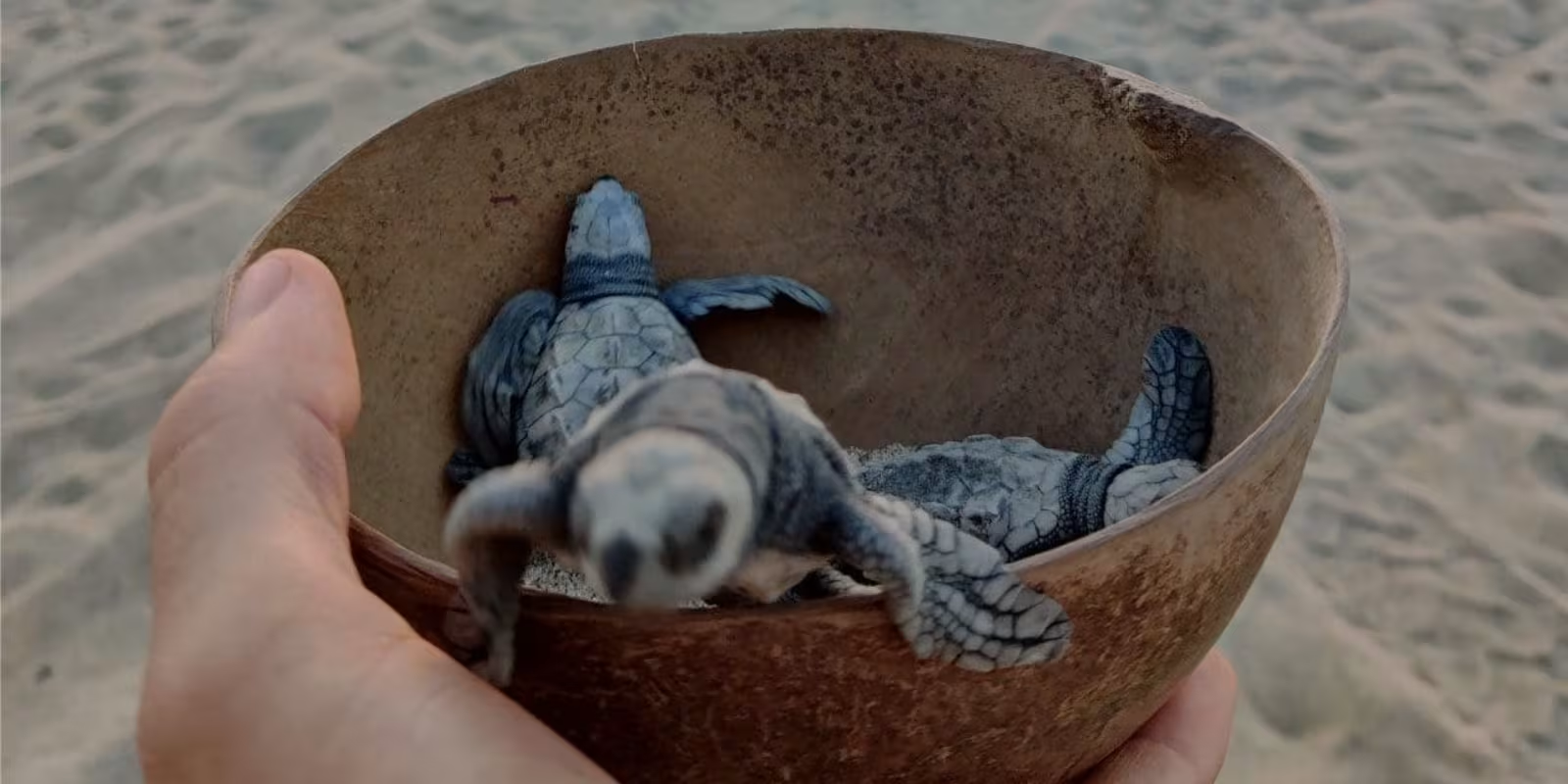
The release takes a few minutes. The work behind it takes about two months, and starts on a dark beach in the middle of the night. Here is what happens before a hatchling ever reaches your hands.
Step 1: the night patrol
During nesting season, conservation teams walk or drive the beaches at night looking for nesting females and fresh tracks in the sand. When a turtle has laid her eggs, the team carefully collects them. Left in place, many nests would be dug up by poachers, dogs or other predators before they had any chance to hatch.
Step 2: the hatchery
The eggs are reburied in a protected hatchery, a fenced area of beach where each nest is marked with its date. The team tries to recreate natural conditions: the right depth, the right sand and, where needed, shade to keep the temperature in a healthy range. That matters because sand temperature decides the sex of the hatchlings.
On the group tour at Playa Escobilla, your guide walks you through the hatchery and shows you nests at different stages, and explains how the team identifies nesting sites and monitors each clutch.
Step 3: hatching day
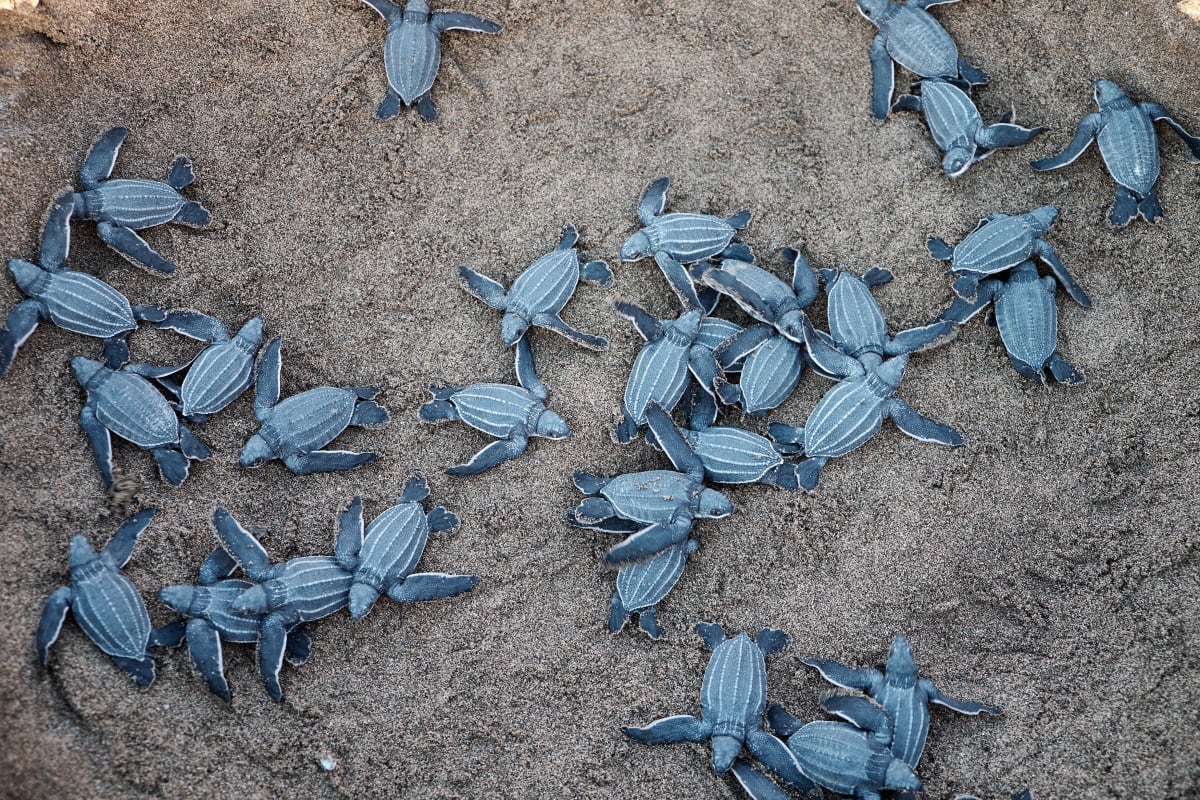
After roughly 45 to 60 days, the hatchlings emerge. The team collects them and keeps them safe until the evening, when the beach is cooler and there are fewer predators. Releases are timed around sunset because that is when the hatchlings' chances are best.
Step 4: the release
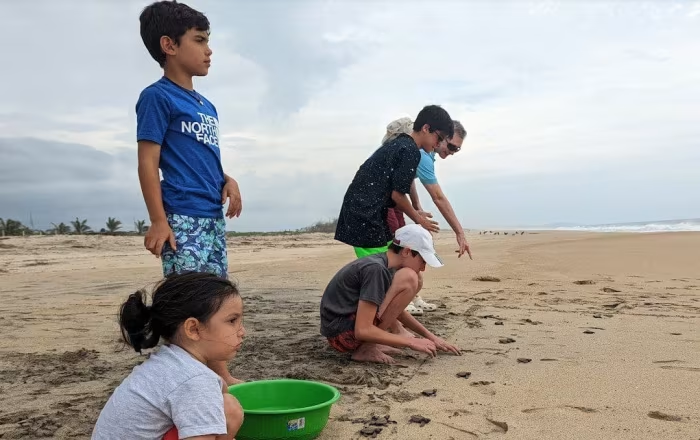
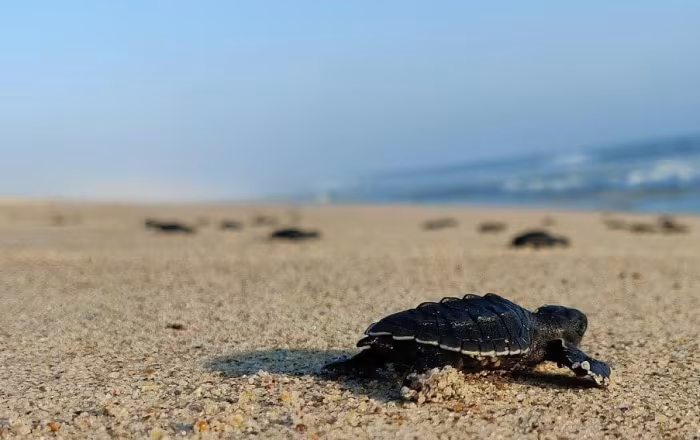
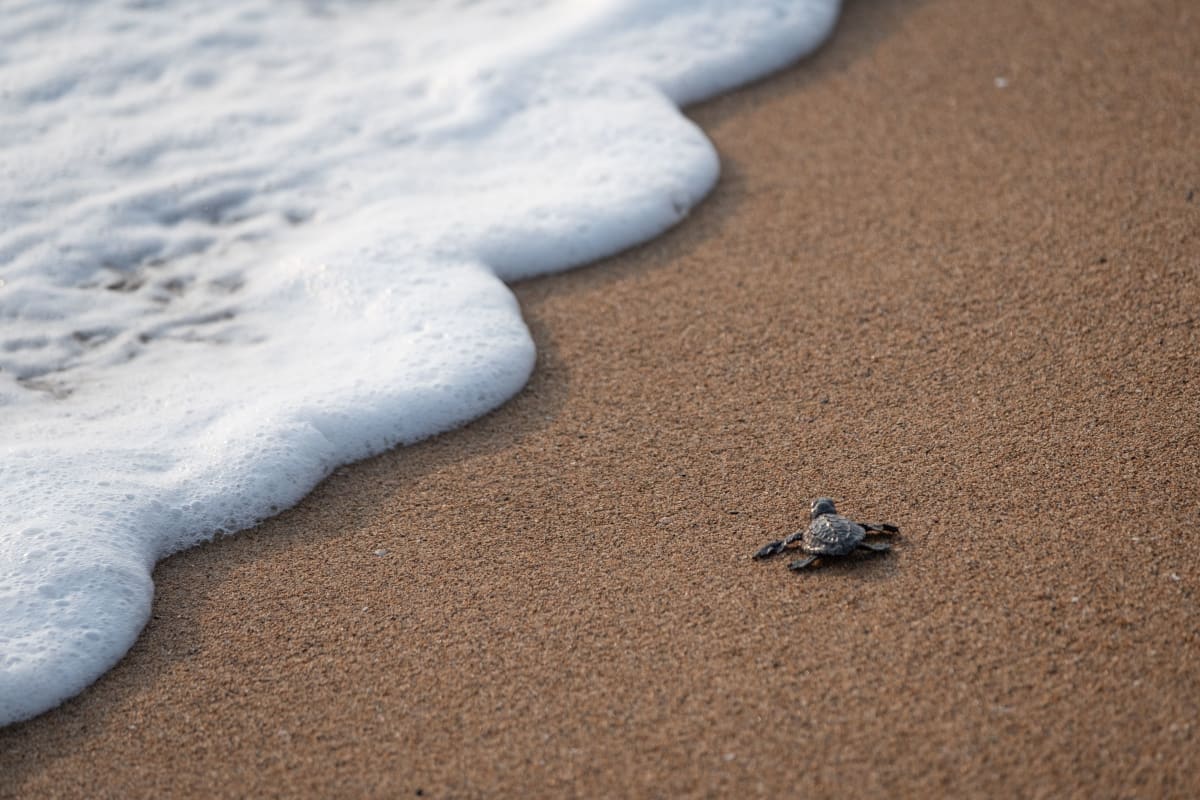
This is where you come in. The hatchlings are placed on the sand a short distance from the water so they can crawl to the sea on their own. That walk matters: scientists believe it helps them imprint on the beach, and females may return to the same region to nest decades later.
A few rules keep them safe:
- No flash photography. Bright light disorients the hatchlings.
- Don't carry them into the water. Let them make the crawl themselves.
- Watch your feet. Hatchlings are small and the same color as the sand.
- Follow the guide. They know how many turtles each person can release that day.
Why visitors matter
Turtle protection on this coast is largely community-led: local families patrol beaches and run hatcheries. Tourism gives that work income and visibility. On the private release, a portion of the price goes directly to a turtle protection program. Guests on the private tour have told us about meeting biologists from small local camps, which is exactly the kind of organization these visits support.
A day in the hatchery
The night patrol gets the attention, but a hatchery needs care in daylight too. Most of that work is quiet and repetitive:
- Checking the dates. Because every nest is marked with the day it was laid, the team knows which ones are close to hatching and watches them more closely.
- Managing the heat. On hot days, shade cloth is set up or adjusted over part of the nests.
- Keeping out small predators. Crabs, ants and other small animals can reach eggs even inside a fence, so the sand is checked for holes and trails.
- Catching the emergence. Nests near their date are often ringed with a small mesh enclosure, so hatchlings that reach the surface stay together instead of scattering across the hatchery. The team can then count them and keep them safe until the evening release.
The principle: the eggs are disturbed as little as possible between the night they are reburied and the day they hatch. Shading and nest temperature are explained in detail in our article on incubation and temperature.
Counting what hatched
A nest's story doesn't end when the hatchlings leave. Shortly after an emergence, many teams carefully dig up the empty nest and sort what's left: shells from turtles that hatched, eggs that never developed and, now and then, a late hatchling still working its way up, which is released too.
Those counts give the hatching success of each nest, the share of eggs that produced a turtle. Over a season they show whether parts of the hatchery run too hot, whether nests were well spaced and whether eggs were moved quickly enough. In Mexico, turtle camps work under official permits and usually report their numbers, which adds to years of records on how nesting along this coast is changing.
A hatchery is a tool, not the goal
In a perfect world, every nest would stay where the mother laid it. Hatcheries exist because poaching, dogs, erosion and crowded beaches put too many eggs at risk. On a mass-nesting beach like Escobilla, only a share of the nests can ever be moved, so protecting the beach itself matters as much as the hatchery. Those mass nestings are covered in our guide to the arribada at La Escobilla.
What you can do after the tour
- Keep beach lights off or shielded if you stay near a nesting beach.
- Never buy turtle eggs or products. Turtle egg trade is illegal in Mexico.
- Pick up plastic on the beach. Turtles mistake bags for jellyfish.
- If you see a nesting turtle, keep your distance and don't use a flashlight.
Curious about the animals themselves? Read our guide to the olive ridley.