Meet the olive ridley: the turtle of Puerto Escondido
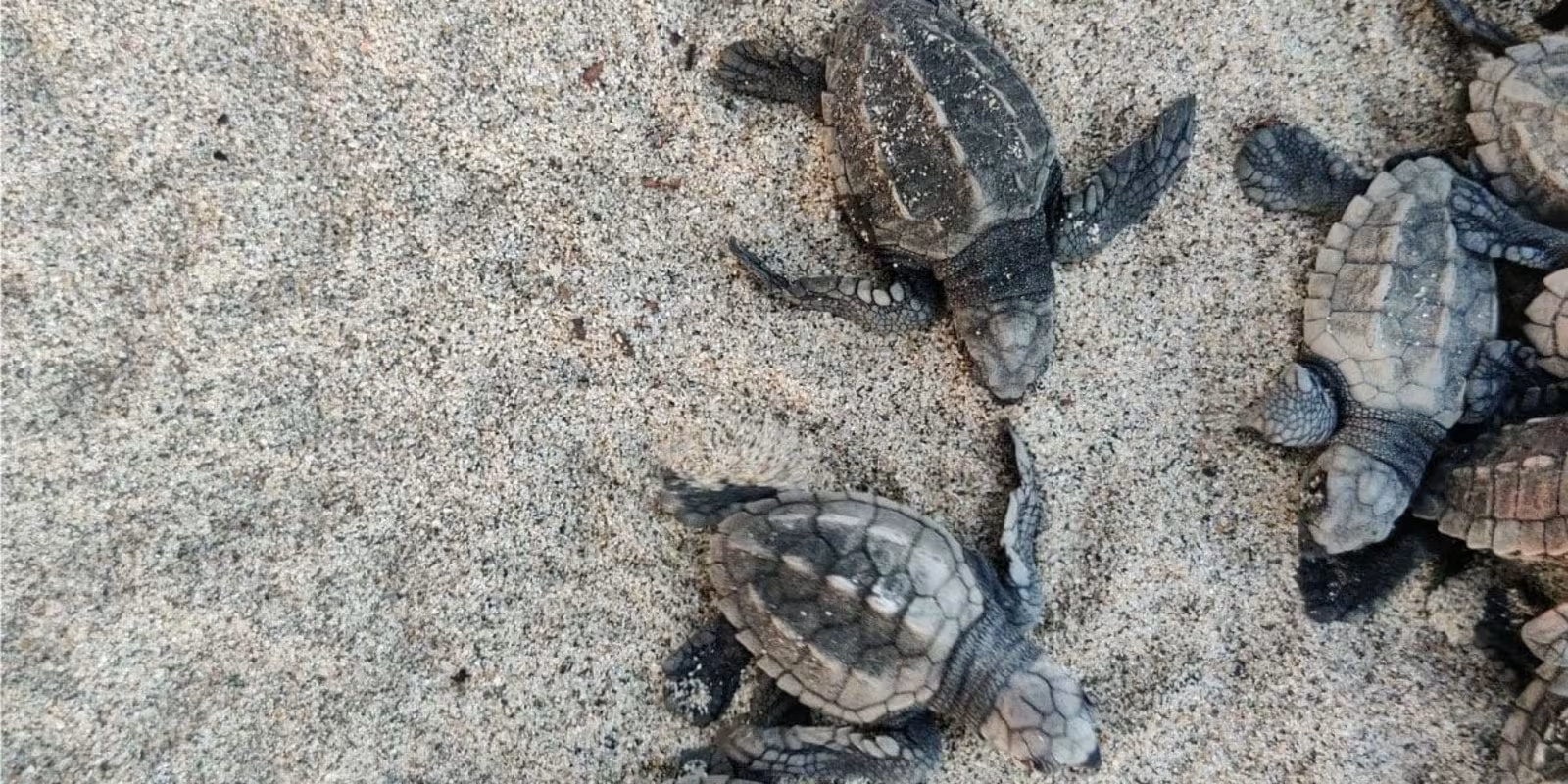
The tiny turtle that scrambles out of your hands on a release near Puerto Escondido is almost always an olive ridley (Lepidochelys olivacea). It is the smallest of the sea turtles that nest on this coast, and one of the most remarkable animals you can meet in Oaxaca.
A small turtle with a huge range
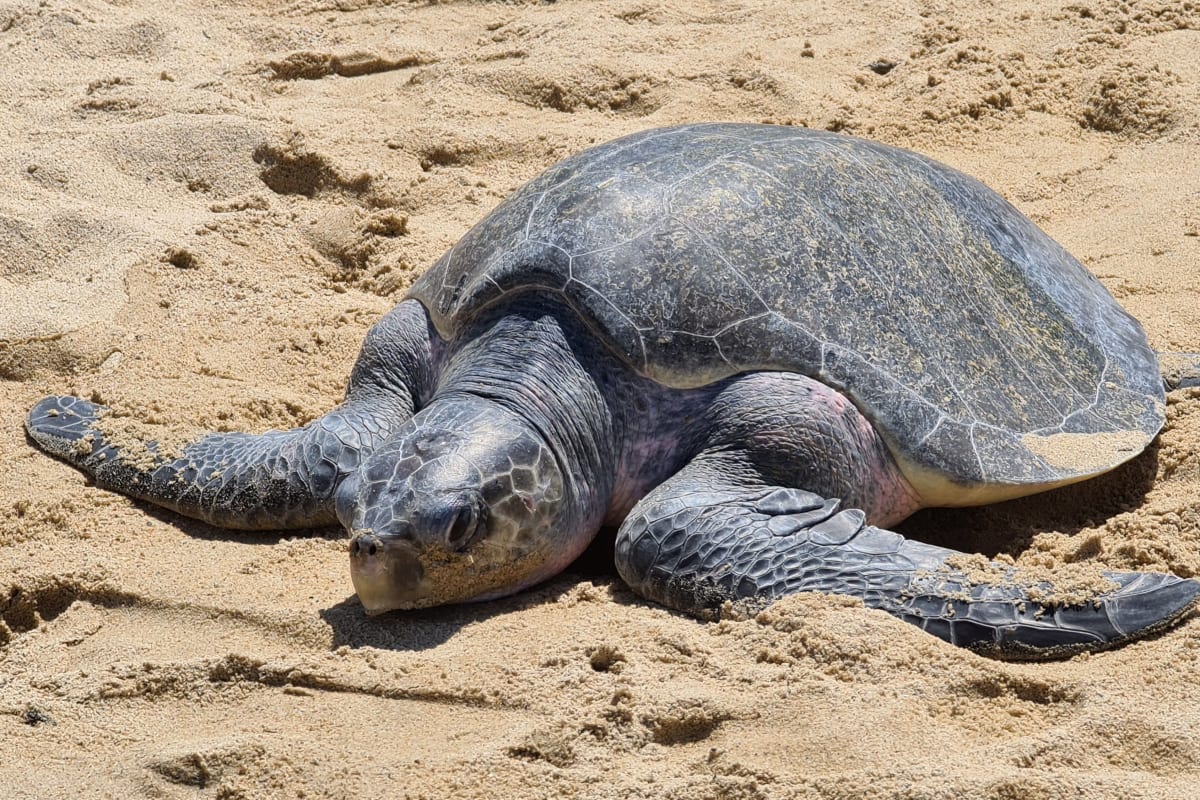
Adult olive ridleys are small by sea turtle standards: their shell is usually around 60 to 70 centimeters long and they weigh roughly 35 to 45 kilos. The name comes from the olive-green color of the shell. They live in the warm waters of the Pacific, Indian and Atlantic oceans and can travel thousands of kilometers between feeding and nesting areas.
The arribada: when thousands arrive at once
Olive ridleys are famous for a behavior almost no other sea turtle shares. Many females come ashore to nest on the same beach over a few nights in a mass event called an arribada, Spanish for "arrival". On the biggest nights, tens of thousands of turtles can crowd a single stretch of sand.
Playa Escobilla, about 30 minutes south of Puerto Escondido, is one of the most important arribada beaches in the world. That's why our releases happen there: it is the heart of olive ridley nesting on the Mexican Pacific. One of our guests put it simply after visiting during an arribada: they "would never have known about this" unless the team had told them.
From egg to ocean
- Nesting. The female digs a nest in the sand with her back flippers and lays around a hundred eggs, then covers them and returns to the sea.
- Incubation. The eggs incubate in the warm sand for roughly 45 to 60 days. The temperature of the sand decides whether the hatchlings will be male or female: warmer nests produce more females.
- Hatching. The hatchlings break out and dig their way up to the surface together, usually when the sand cools.
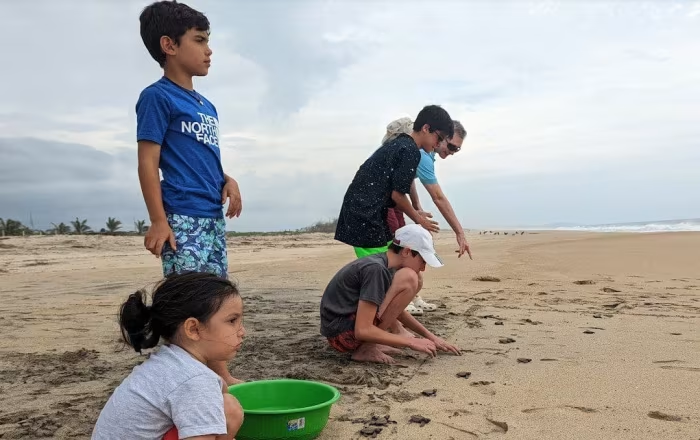
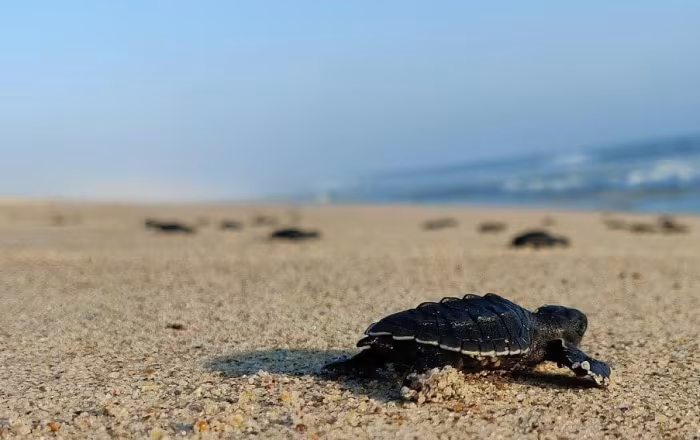
- The run to the sea. They head for the brightest horizon, which on a natural beach is the ocean. This is the moment you witness on the tour.
- The lost years. Young turtles drift in the open ocean for years. Scientists still know relatively little about this stage.
Why they need protection
Only around 1 in 100 hatchlings survives to adulthood. On the beach, eggs are threatened by poaching, dogs, crabs and birds. In the water, young turtles face fish, sharks, fishing nets and plastic. Artificial lights near beaches confuse hatchlings, which crawl toward the lights instead of the sea.
That is where local conservation teams come in. They patrol the beaches at night, move eggs to protected hatcheries and release the hatchlings when they are ready. Every visitor on a release supports that work.
A hatchling up close
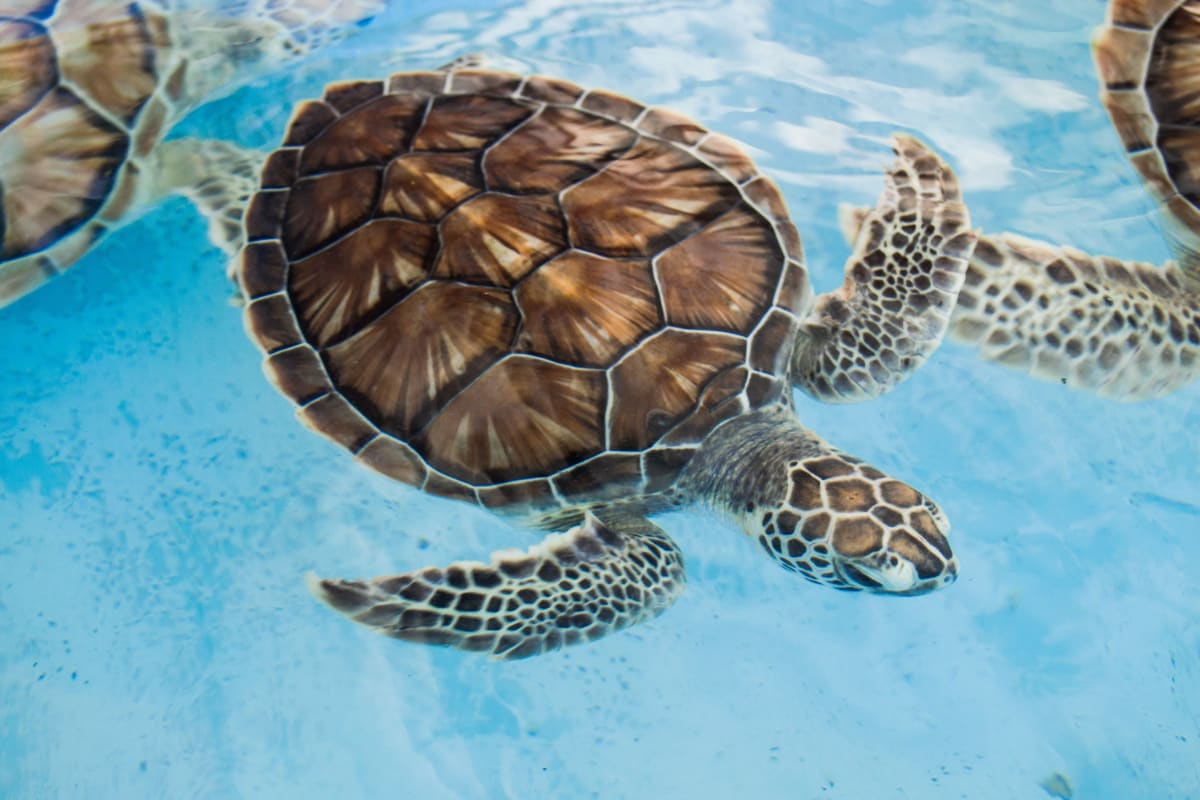
The turtle in your hands usually weighs around 15 to 20 grams, about as much as a few coins, and its shell is only some 4 to 5 centimeters long. Olive ridley hatchlings are dark gray, almost charcoal, with front flippers that look oversized for their body. Those flippers are built for swimming, which is why the hatchling paddles in your palm before it has even touched the water. On the middle of its belly there is a small scar where the yolk sac closed: that yolk is the fuel for its first days at sea.
The first hours at sea
What you watch at the waterline is only the start of a long swim. Once a hatchling reaches the water, it enters what biologists call a swimming frenzy: it paddles almost nonstop, usually for roughly its first day, to get past the shallow coastal waters where fish and birds hunt. It doesn't eat during that time and lives on its yolk reserves.
To find its way, it first swims into the oncoming waves, which near the shore leads it straight out to sea. Farther offshore, sea turtles are thought to use the Earth's magnetic field to keep their bearings. That is one more reason the crawl and the first swim should happen without help: carrying a hatchling into the sea, or holding it back for extra photos, burns energy it needs for this stage.
Adult life: food and nesting
Adult olive ridleys are omnivores. They eat crabs, shrimp, jellyfish, small fish, fish eggs and algae, mostly in open water, and can dive deeper than 100 meters to find food. Off the Oaxacan coast they are sometimes seen floating at the surface, resting or warming in the sun.
Females are thought to take somewhere between about 10 and 18 years to mature, though estimates vary. After that, many return to nest every one or two years, often laying more than one clutch in a season, a few weeks apart. To see how they compare with the other turtles of this coast, read our guide to the sea turtle species of Oaxaca; for what is true and what isn't about their lifespan, see our sea turtle myths article.
Other species you might hear about
Leatherbacks, the largest turtles in the world, also nest on the Oaxacan coast in much smaller numbers, and leatherback hatchlings are occasionally released. Green turtles are often seen in the water off Puerto Escondido on boat trips.
Ready to meet them? Read our practical tips for the release or learn how turtle conservation works here.