Oaxaca's sea turtle species: olive ridley, leatherback, green and hawksbill
Mexico is home to six of the world's seven sea turtle species, and four of them can be found along the coast of Oaxaca. They are not equally common, though. One species fills the beaches by the thousands, another is a rare giant, and two are more likely to be glimpsed in the water than on the sand. Here is a practical guide to the sea turtle species of Oaxaca: what they look like, how to tell them apart and where you might meet each one near Puerto Escondido.
Quick comparison
- Olive ridley (tortuga golfina): small, olive-gray shell. By far the most common on this coast, and the one you release on our tour.
- Leatherback (tortuga laúd): the largest turtle in the world, with a soft, ridged, leathery back instead of a hard shell. Nests in small numbers, mostly in winter.
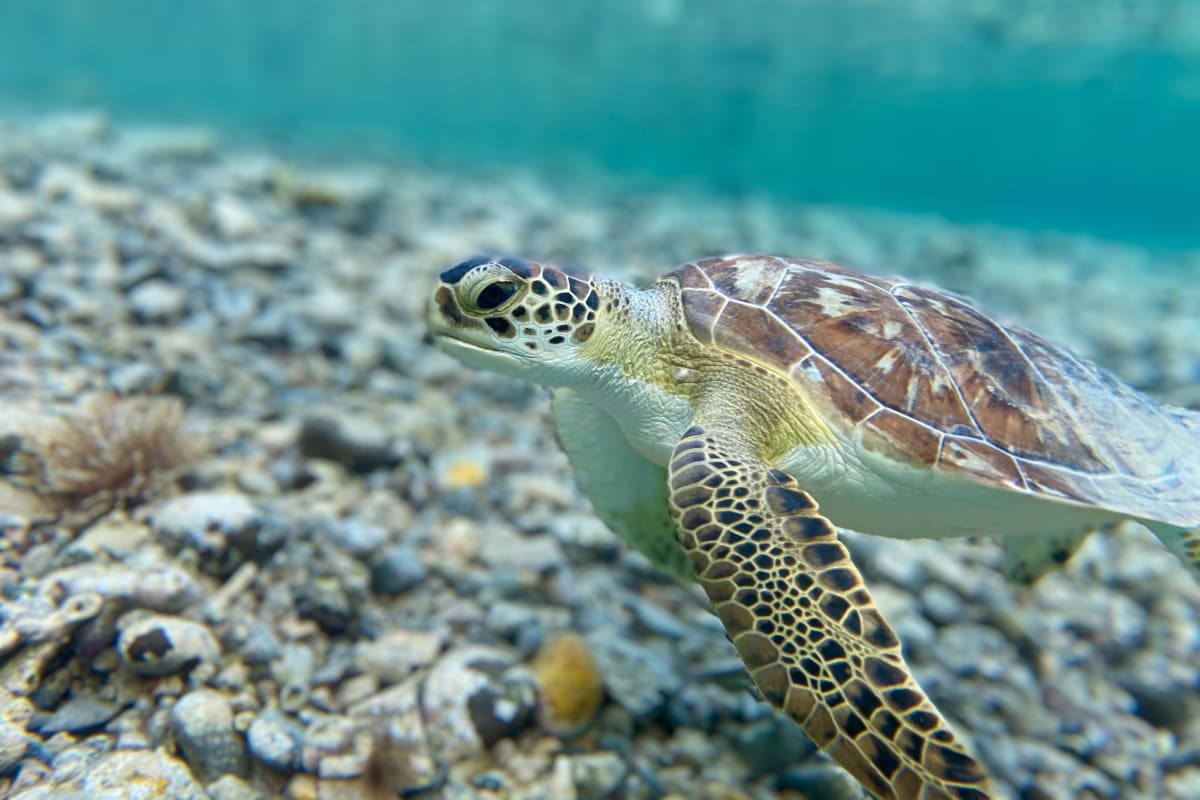
- Green turtle (tortuga verde or tortuga prieta): medium to large, dark shell, small rounded head. Seen in the water more often than on the beach.
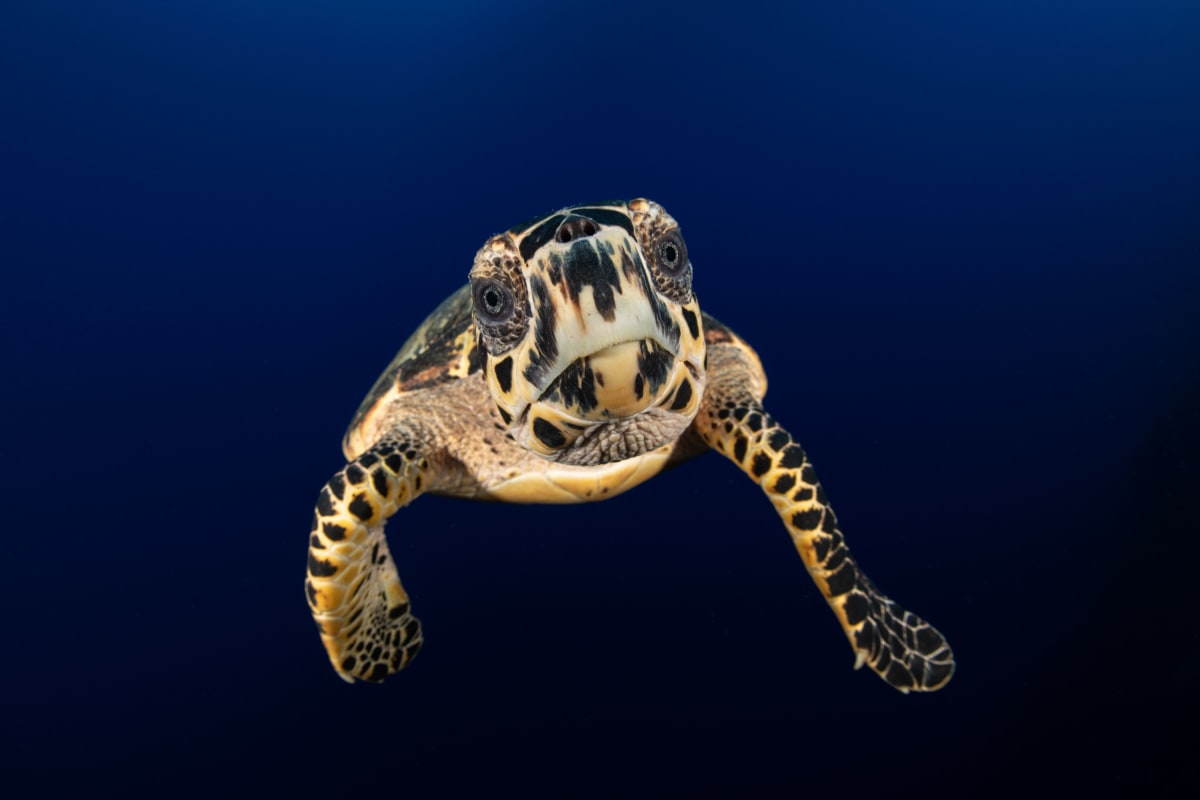
- Hawksbill (tortuga carey): pointed, bird-like beak and overlapping shell plates. Very rare on the Pacific side of Mexico.
Olive ridley: the turtle of Escobilla
The olive ridley (Lepidochelys olivacea) is the star of the Oaxacan coast. Adults are among the smallest sea turtles, with a shell usually around 60 to 70 centimeters long, roughly heart-shaped and olive to grayish in color. Seen from above, the shell looks almost round compared with other species.
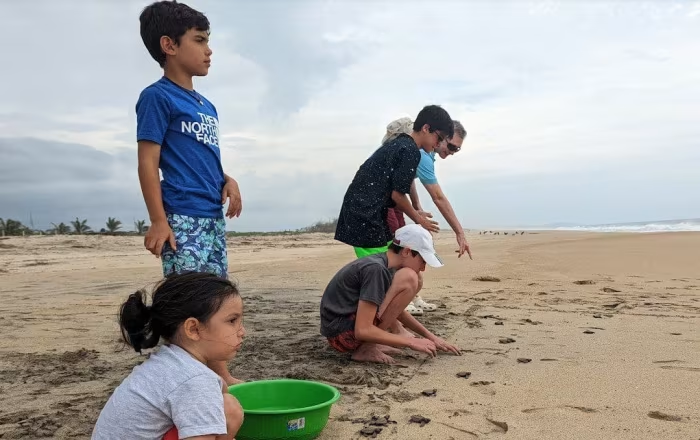
What makes it special is the arribada, the mass nesting in which thousands of females come ashore on the same beach over a few nights. Playa Escobilla, about 30 minutes south of Puerto Escondido, is one of the most important arribada beaches anywhere, and that is where our evening releases take place. Its main nesting season runs roughly from June to January, but hatchlings emerge all year.
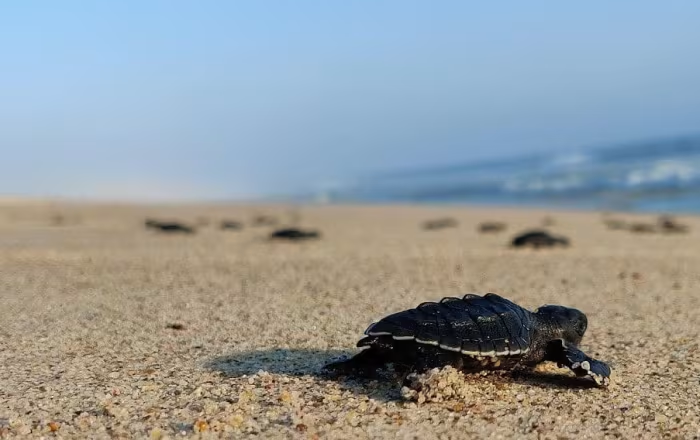
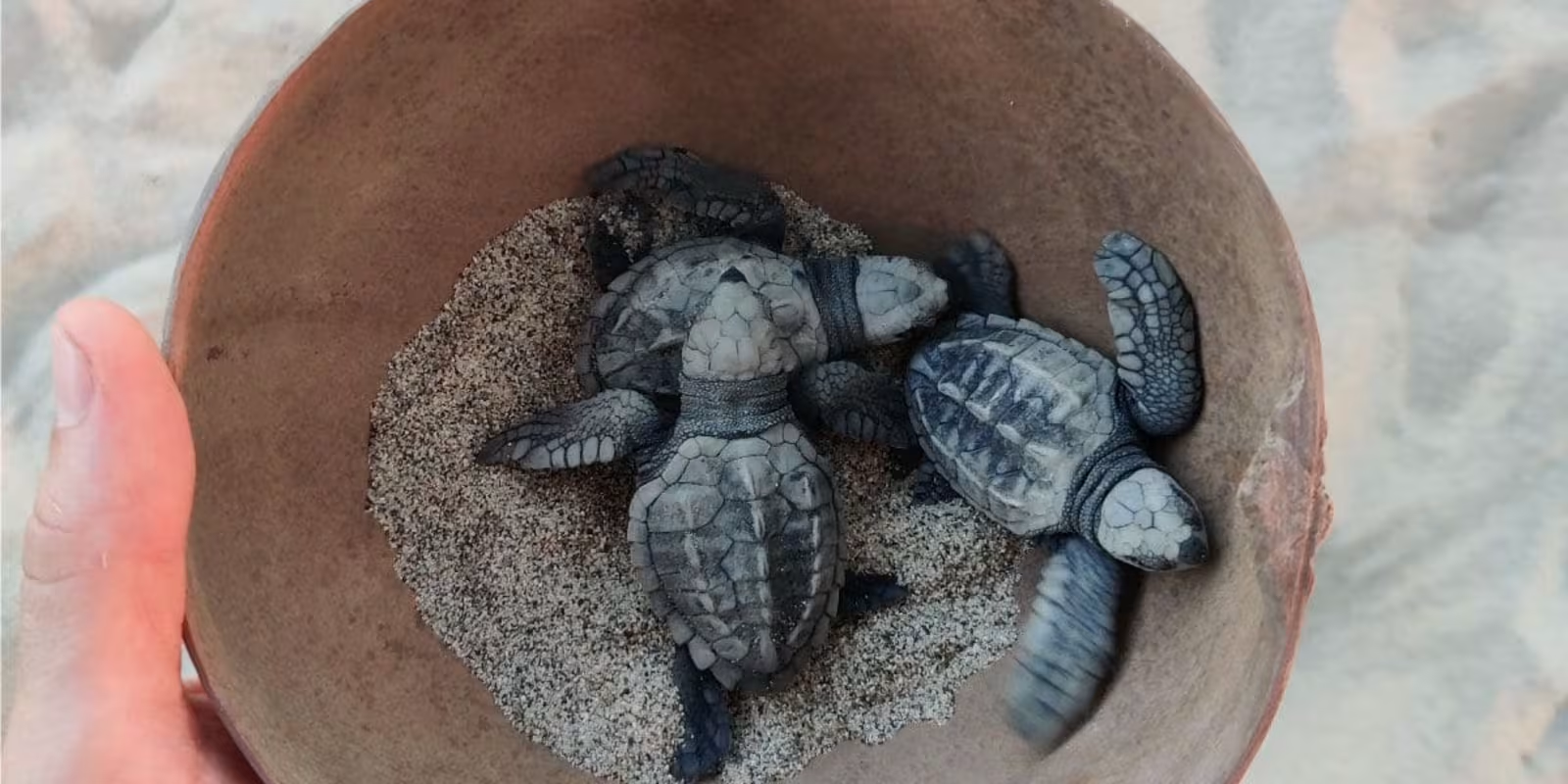
If you join a release, the palm-sized hatchling in your hands is almost certainly an olive ridley: dark gray, a few centimeters long, flippers already paddling. We cover its life cycle in detail in our olive ridley guide.
Leatherback: the gentle giant
The leatherback (Dermochelys coriacea) is in a family of its own. Instead of hard scutes, its back is covered by thick, rubbery skin over a mosaic of small bones, with seven ridges running from head to tail. Adults can measure more than one and a half meters along the shell and weigh several hundred kilos. They dive deep and travel enormous distances, feeding mostly on jellyfish.
The Eastern Pacific leatherback population has declined dramatically in recent decades and is considered critically endangered. A handful of beaches on the Oaxacan coast are among its most important nesting sites in Mexico, and conservation teams guard every nest they can find. Leatherbacks nest mostly in the cooler months, roughly from November to March.
Because there are so few, leatherback hatchlings are only occasionally part of a release. If it happens on your evening, you'll notice: the hatchlings are larger than olive ridleys, black with thin white lines along the back, and have long front flippers. Consider yourself lucky.
Green turtle: the grazer
The green turtle (Chelonia mydas) gets its name from the greenish color of its body fat, not its shell. In the Eastern Pacific the population is noticeably darker, almost black, which is why Mexicans often call it tortuga prieta or tortuga negra. Adults are bigger than olive ridleys, with a smooth oval shell and a short, rounded head that looks small for the body.
Green turtles are the only sea turtles that are mainly herbivorous as adults, grazing on algae and seagrass. Along the Oaxacan coast they nest in small numbers, but you are more likely to see one surfacing to breathe near rocky points or on a boat trip off Puerto Escondido than on a nesting beach.
Hawksbill: the rarest of the four
The hawksbill (Eretmochelys imbricata) is easy to recognize up close: a narrow head ending in a sharp, curved beak, and shell plates that overlap like roof tiles, often with a beautiful amber pattern. That pattern is exactly what nearly wiped it out, because hawksbill shell was used for centuries to make "tortoiseshell" combs, jewelry and ornaments.
Hawksbills are critically endangered worldwide, and on the Pacific coast of Mexico they are rare. They prefer rocky reefs, where they feed largely on sponges. Sightings off Oaxaca happen, mostly by divers and snorkelers, and nesting on this coast is exceptional. If you ever see one, it's a genuinely special encounter.
How to tell them apart at a glance
- No hard shell, ridges on the back? Leatherback.
- Sharp, hooked beak and overlapping plates? Hawksbill.
- Small rounded head on a large, dark, smooth shell? Green turtle.
- Small turtle with a round, olive-gray shell? Olive ridley, the most likely answer on any beach near Puerto Escondido.
Hatchlings are harder to tell apart, but your guide at the hatchery will tell you which species you're holding.
What about loggerheads?
Loggerheads (Caretta caretta) live in the Pacific too, but in Mexico the Pacific loggerheads are mainly found feeding off Baja California, after crossing the ocean from their nesting beaches in Japan. They do not nest in Oaxaca, so you won't see them on a release here.
Are all sea turtles protected in Mexico?
Yes. All sea turtle species are protected by Mexican law, and catching turtles or collecting their eggs has been banned since 1990. That protection is a big part of why olive ridley numbers at Escobilla recovered after decades of heavy exploitation. The other three species still have a long way to go, which is why every protected nest counts.
A few simple habits help, whatever species you meet:
- Never buy turtle eggs, meat or products made from shell.
- In the water, keep your distance and never touch or chase a turtle.
- On the beach at night, keep lights off and avoid flash photography.
- Take your trash with you; plastic bags look a lot like jellyfish to a hungry leatherback.
Planning your visit around nesting and hatching? Our month-by-month guide to turtle season in Oaxaca shows what usually happens on the beach throughout the year.