What is an arribada? The mass nesting at La Escobilla and Morro Ayuta
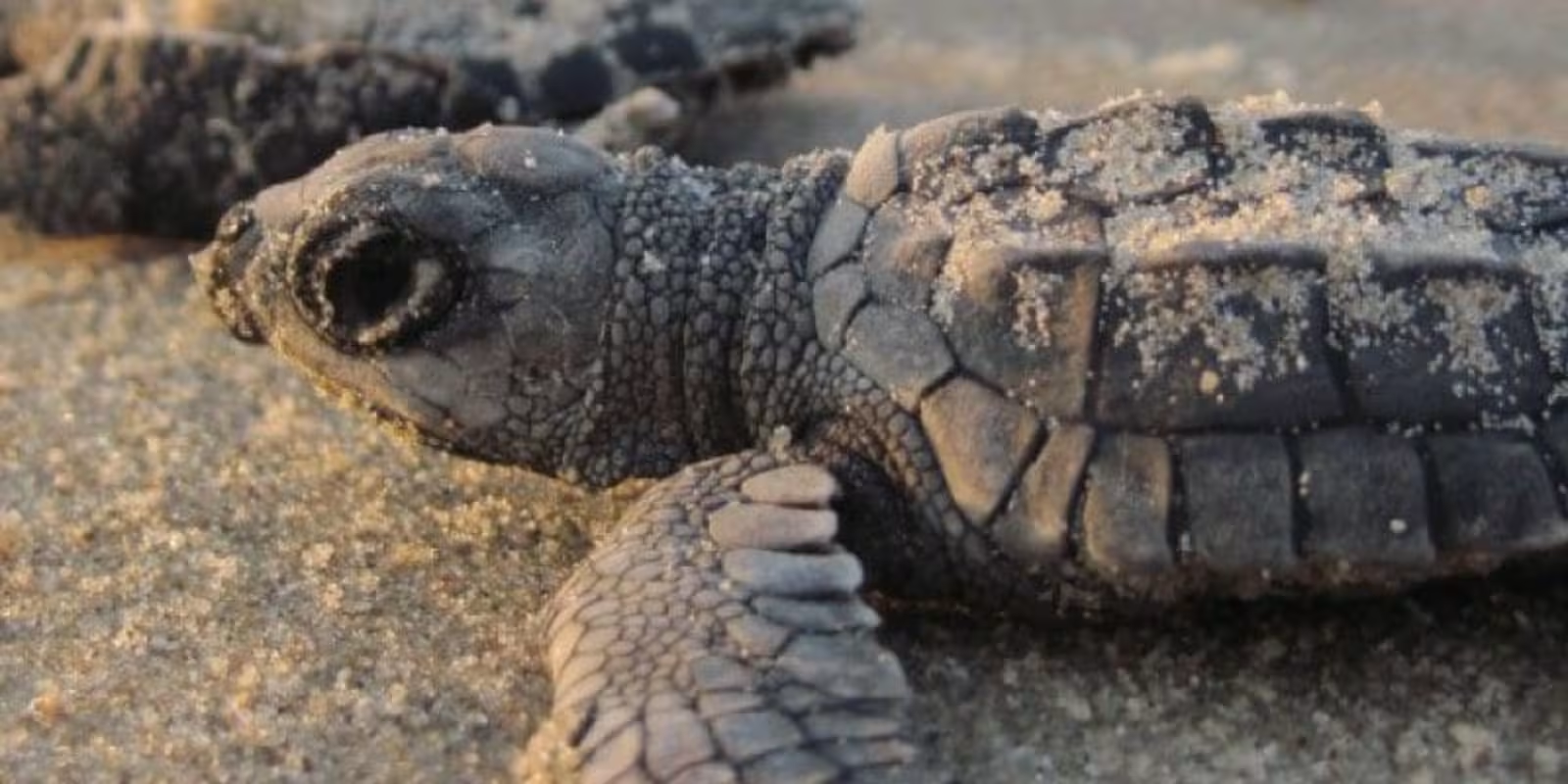
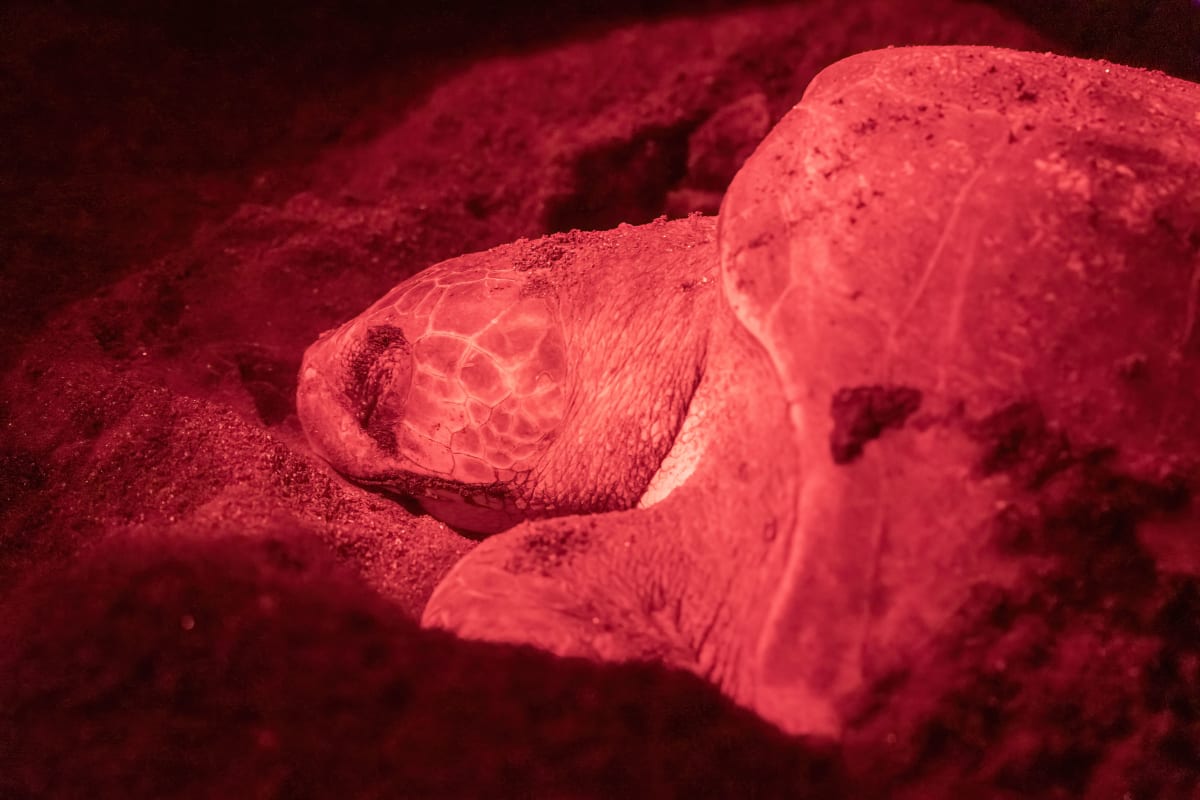
Picture a beach at night where the sand seems to move. Thousands of turtles, shell against shell, are digging nests at the same time, and more keep arriving from the surf. That is an arribada, and one of the best places in the world for it is about 30 minutes south of Puerto Escondido, at Playa La Escobilla. Here is what actually happens, why it happens, and what it means if you are visiting the Oaxacan coast.
What does "arribada" mean?
Arribada is Spanish for "arrival". Biologists use the word for a synchronized mass nesting: many females gather in the water off one beach and then come ashore together over a few nights, usually somewhere between three and seven. Outside those nights, the same beach still receives turtles that nest on their own, which locals and researchers call solitary nesting.
Only two sea turtles in the world behave this way, and both belong to the same genus: the olive ridley (Lepidochelys olivacea), which nests on the Pacific coast of Oaxaca, and the Kemp's ridley (Lepidochelys kempii), which nests on the Gulf of Mexico. Every other species, including the leatherbacks and green turtles you may hear about here, nests alone.
Why do thousands of turtles nest at once?
Nobody has a complete answer, and it's honest to say so. The leading idea is safety in numbers. Predators like dogs, vultures, raccoons and crabs can only eat so many eggs, so when hundreds of thousands of nests are laid in a few days, a larger share of them survives than if they were spread across the year. Hatchlings also emerge in waves, which overwhelms the predators waiting at the waterline.
What triggers the start of each arribada is still studied. Researchers have linked it to things like the phase of the moon, wind, waves and the tides, and females seem to signal each other while they wait offshore. Arribadas often happen around the same time of the lunar cycle, but not reliably enough to put on a calendar.
The strategy has a cost. On the busiest nights, turtles dig into nests laid the night before and break eggs, and so much organic matter in the sand can lower hatching success. That's one reason conservation teams move eggs from the most crowded stretches into protected hatcheries.
La Escobilla: one of the great arribada beaches
Playa La Escobilla is a long, open beach in the municipality of Santa María Tonameca, between Puerto Escondido and Puerto Ángel. It is counted, along with Ostional in Costa Rica and the beaches of Odisha in India, among the most important olive ridley nesting sites on the planet. In strong seasons, the number of nests counted here runs into the hundreds of thousands and, in some years, well over a million.
It wasn't always a success story. For decades, olive ridleys on this coast were hunted commercially for their meat, skin and eggs, and the population dropped sharply. Mexico banned the capture of sea turtles and the trade in their eggs in 1990, and La Escobilla had already been declared a turtle sanctuary in 1986. Today it is a federal protected area managed by CONANP, Mexico's national parks agency, with conservation teams and patrols working on the beach. The recovery of the olive ridley here is one of the clearer conservation wins on the Mexican Pacific.
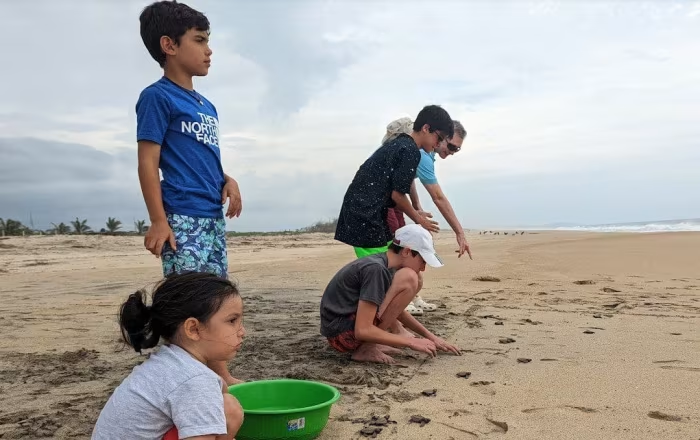
This is also where our evening releases take place. The hatchery you visit on the tour sits on this beach, and many of the hatchlings you hold come from nests laid during arribadas.
Morro Ayuta: the second arribada beach in Oaxaca
Morro Ayuta lies further east, in the municipality of San Pedro Huamelula, past Huatulco and several hours' drive from Puerto Escondido. It is a remote beach with few services, and for a long time it received much less attention than La Escobilla. Over the past couple of decades it has become a major arribada site in its own right, which gives Oaxaca two of the world's arribada beaches.
Morro Ayuta is not a tourist destination: access is limited, the beach is patrolled, and there is no visitor program to speak of. If you hear about it during your trip, it is most likely from biologists or the news.
When do arribadas happen?
On the Oaxacan coast, arribadas usually happen during the olive ridley nesting season, roughly from July to December, with the strongest months in most years between August and November. A single season can bring several arribadas, often spaced a few weeks apart, because each female nests more than once in a season.
Most of the action is at night, although on the biggest arribadas turtles can keep coming ashore into the morning. The exact dates are only known when turtles start gathering offshore, so no one can promise you an arribada on a given day. For a fuller picture of the year, see our turtle season guide, month by month.
Can visitors see an arribada?
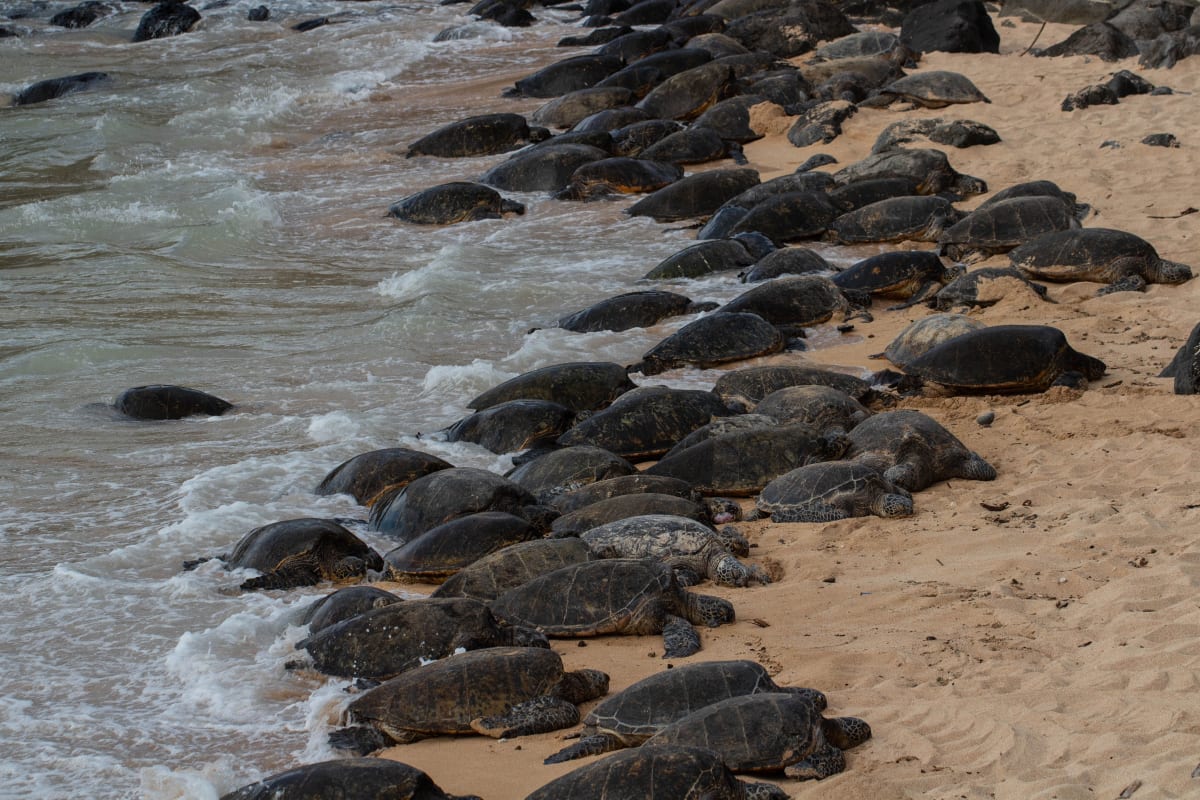
Usually not up close, and that is by design. La Escobilla is a sanctuary, and during an arribada access to the nesting zone is restricted to protect the turtles and their nests. Lights, noise and crowds on the sand can disturb females that are still deciding whether to come ashore.
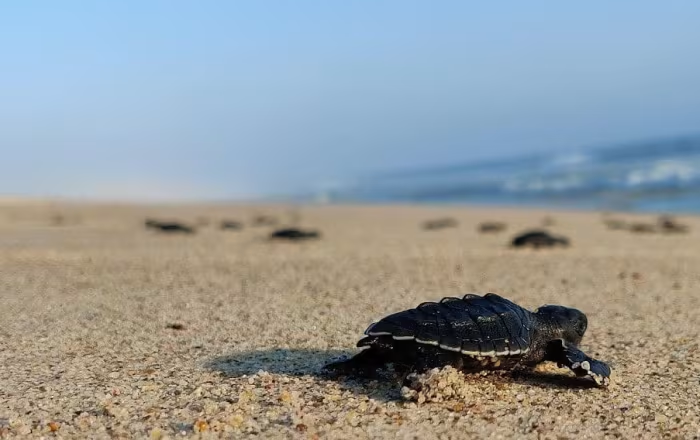
Our tour is an evening hatchling release, not a night nesting tour. We don't sell arribada viewing and we won't promise you'll see adult turtles. What you do see is the other end of the story: the hatchery where eggs from those nights are incubated, and the moment hatchlings reach the sea at sunset. If an arribada is underway while you are with us, your guide will tell you what's happening on the beach.
If you ever meet a nesting turtle
Solitary olive ridleys nest on many beaches along this coast, so it is possible to come across one on an evening walk. If you do:
- Keep your distance and stay behind her, out of her line of sight.
- Don't use a flashlight, a phone screen or a camera flash near her.
- Don't touch her, the eggs or the nest, and don't try to "help" her back to the water.
- Let the local conservation team or the beach patrol know where the nest is.
And wherever you are in Mexico, never buy turtle eggs, meat or products made from shell. Demand for eggs is still one of the main threats on many beaches.
From the arribada to your hands
An arribada lasts a few nights, but its effect on the beach lasts for months. Roughly 45 to 60 days after each one, the sand starts to give back hatchlings, first in a trickle and then in waves. That is why the busiest weeks for releases often come well after the busiest weeks for nesting.
If you want to know what happens to the eggs in between, read how sea turtle conservation works near Puerto Escondido, or get to know the animal itself in our olive ridley guide.