From hunting to protection: the story of sea turtles in Mazunte

Today Mazunte is known for yoga, Punta Cometa sunsets and a turtle center that schoolchildren from all over Oaxaca visit. Thirty-five years ago it was known for something very different: it was the heart of Mexico's sea turtle slaughter. The story of how a village built around killing turtles became one built around protecting them explains a lot about the coast you are visiting, including the hatchlings you release near Puerto Escondido.
A tiny village before the turtle trade
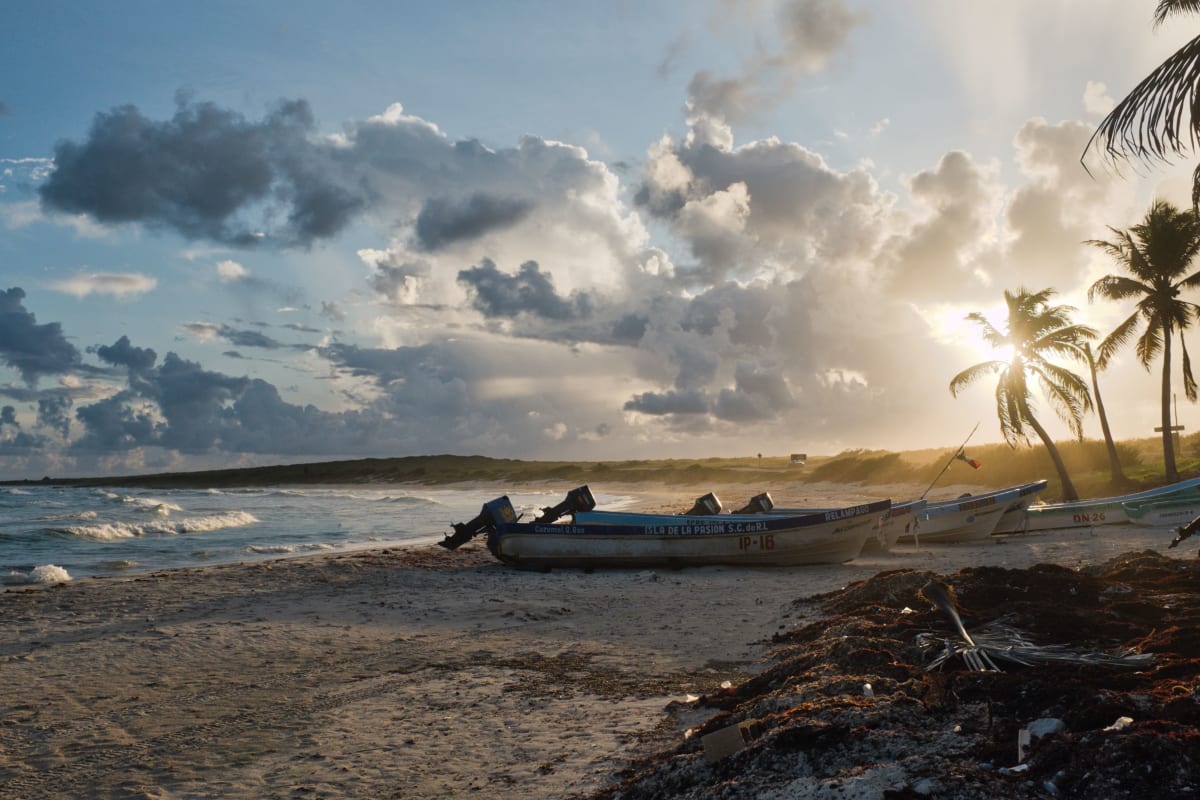
Until the middle of the 20th century, Mazunte was barely a village. Local accounts, including the town's own official history, describe just two or three families living there, fishing and farming for themselves. The beaches between Puerto Ángel and Puerto Escondido were remote, with few roads and almost no visitors.
What changed everything was a market. Turtle meat, eggs, skin and shell were in demand, and the Oaxacan coast had what few places on Earth have: olive ridleys nesting by the thousands, including the mass arrivals at nearby La Escobilla. People moved in to work in the trade, and Mazunte grew around it.
The slaughterhouse years
In the late 1960s and 1970s a turtle slaughterhouse operated at San Agustinillo, the bay right next to Mazunte. It turned the area into the center of sea turtle exploitation in Mexico. Turtles were caught at sea and on the beaches, butchered, and their meat, skin and shell shipped out. Skin was especially valuable for leather goods, and eggs were sold separately across the country.
The figures you will read vary by source, so treat them as orders of magnitude. The most widely cited number is around 30,000 turtles a year killed legally under official quotas, and many conservationists believe illegal catches pushed the real total to more than twice that. Some local accounts speak of days when well over a thousand turtles were processed.
Mexico tried to put limits on it. Seasonal closures were introduced in the 1970s and egg collection was banned on paper in 1971, but enforcement was weak and the rules were widely ignored. By the late 1980s, nest counts on the key Oaxacan beaches had fallen to a small fraction of what they had been. The olive ridley, once so abundant here that people thought it could never run out, was in serious trouble.
1990: the total ban
On 31 May 1990, the federal government published a decree in the Diario Oficial establishing a total and indefinite ban on capturing, pursuing or harming any species of sea turtle in Mexican waters, on both the Pacific and the Gulf coasts. The trade in turtle meat and eggs became illegal nationwide.
It is easy to tell this part as a happy ending, but for Mazunte it was a crisis. The slaughterhouse closed, and almost overnight most families lost their main source of income. Men who had spent their lives catching turtles had no other trade. Some kept poaching. Others left. The question was what a village could live on once its only industry was gone.
The Mexican Turtle Center
Part of the answer was the turtle itself, alive this time. In 1991 the federal government created the Centro Mexicano de la Tortuga (Mexican Turtle Center) in Mazunte, on a four-hectare site by the beach, close to where the turtle industry had been. Construction followed in the early 1990s and the center opened to the public in 1994. It built on an older, smaller turtle station on this coast that the national fisheries institute had run since the 1980s.
The center combines research, a hatchery program and an aquarium, and it holds specimens of the sea turtles found in Mexican waters, along with freshwater and land turtles. It is now run by CONANP, Mexico's protected areas agency. Just as important, former hunters and their children found work there as guides, monitors and beach patrollers. The people who knew best where and when turtles came ashore became the people protecting the nests.
Cosmetics, ecotourism and a new reputation
The turtle center was not the only bet. In the early 1990s, with support from NGOs, the community worked on reforestation and small ecotourism projects: cabins, local guides, homestays. A visit from Body Shop founder Anita Roddick in 1993 led to a deal to sell cosmetics made in the village, and in 1996 a group of local families set up Cosméticos Naturales de Mazunte, which still makes soaps and creams from local ingredients today.
None of this was smooth. Hurricane Pauline hit the coast hard in 1997, and Carlotta damaged Mazunte again in 2012. But over two decades the town's reputation flipped. In 2015, Mexico's tourism ministry named Mazunte a Pueblo Mágico, and the turtle that once fed the slaughterhouse is now on the town's signs, murals and souvenirs.

Did the turtles actually come back?
For the olive ridley, mostly yes. After the 1990 ban, together with protection of La Escobilla as a sanctuary since 1986 and years of beach patrols, nest numbers on the Oaxacan coast recovered strongly. In good seasons La Escobilla now counts nests in the hundreds of thousands, and it is again among the most important olive ridley beaches in the world. You can read more about that in our guide to the arribada at La Escobilla.
The recovery isn't complete, and it isn't the same for every species. Leatherbacks on the Mexican Pacific remain critically low, egg poaching still happens on some beaches, and turtles are still caught accidentally in fishing gear. The ban didn't end the threats; it ended the legal industry, which gave conservation room to work.
What this history means for your release
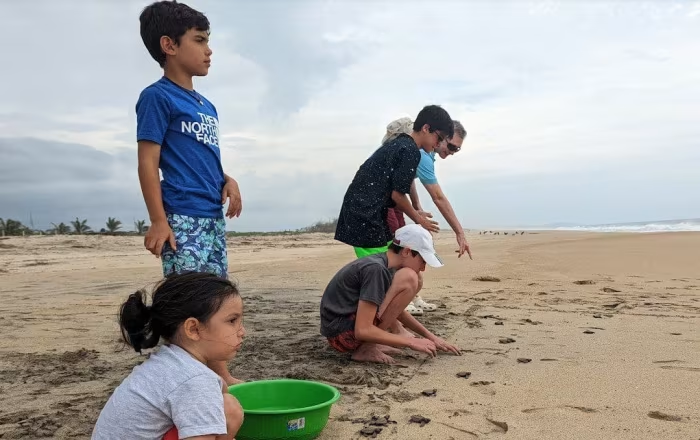
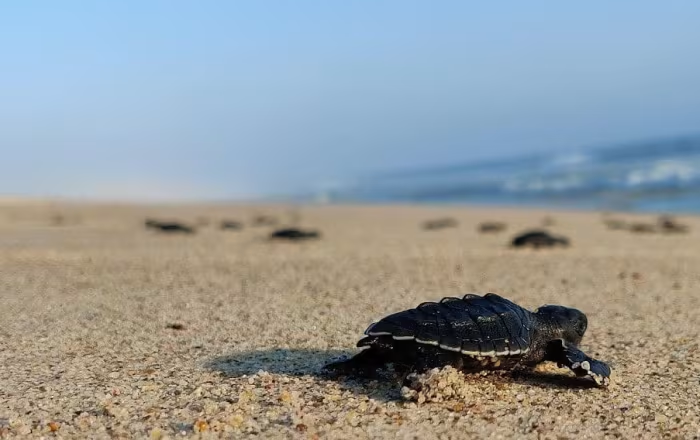
When you hold a hatchling on the beach south of Puerto Escondido, you are looking at the direct result of that change. Hatcheries, patrols and releases like ours exist because, after 1990, the coast decided turtles were worth more alive. Part of what keeps that system running is local people earning a living from protecting turtles instead of selling them. For how the egg-to-ocean process works day to day, see how sea turtle conservation works near Puerto Escondido.
A few practical things follow from that history:
- Never buy turtle eggs, meat, leather or shell products anywhere in Mexico. They are illegal, and demand for them is what drove the decline.
- Choose releases connected to a real conservation program, with a hatchery and trained staff, rather than ones staged for photos.
- If you visit Mazunte, the Turtle Center is worth an hour or two. It is usually closed on Mondays and Tuesdays and has closed at times for maintenance, so check its current hours before driving over.
Visiting Mazunte from Puerto Escondido
Mazunte is east of Puerto Escondido along the coast road, past Playa La Escobilla, and most people make it a day trip or a night or two away. Combine the Turtle Center with the walk to Punta Cometa at sunset and a swim at the main beach, and you will see the whole arc of this story in one day: the coast where turtles were once processed by the tens of thousands, and a town that now makes its living from keeping them alive.
And if you want to understand the animal at the center of it all, start with our guide to olive ridley sea turtles in Oaxaca.