Is a turtle release ethical? What a responsible program looks like

It's a fair question, and more travelers ask it every year. Baby turtle releases are sold all along Mexico's Pacific coast, and not all of them are run the same way. Some are genuine conservation work that welcomes visitors. Others are closer to a photo opportunity with an animal attached. The difference isn't always obvious from a booking page, so here is an honest look at both sides.
The short answer
A turtle release can be ethical, and it can do real good, when it's part of a legitimate egg-protection program and the hatchlings' needs come before the visitors'. It stops being ethical when turtles are kept, handled or timed for the convenience of tourists. The release itself is the last few minutes of weeks of work. What matters is how that work is done, and whether the release fits into it rather than the other way around.

Why people criticize turtle releases
The criticism is worth taking seriously, because most of it is based on real problems seen at badly run operations:
- Holding hatchlings for hours or days. A newly hatched turtle lives off the yolk it absorbed in the egg, and it needs that energy for its first swim offshore. Hatchlings kept in buckets until enough tourists arrive start their journey weaker.
- Releasing in the heat of the day. Hot sand and strong sun are dangerous for hatchlings, and daytime releases also put them in front of more birds.
- Too much handling. Passing turtles from hand to hand, posing for photos or dropping them in the water skips the crawl that helps them orient themselves.
- Flash and lights. Hatchlings find the ocean by heading toward the brightest horizon. Phone flashes and flashlights can send them the wrong way.
- Same spot, every night. When releases always happen at exactly the same point, predators can learn where to wait.
- Hatcheries without care. Sand temperature decides whether a nest produces males or females. A crowded, unshaded hatchery can skew that balance or lose nests to overheating.
None of these are reasons to give up on hatcheries. On many Mexican beaches, nests left in place would be dug up by poachers, dogs or other predators long before hatching. They're reasons to choose carefully.
What a responsible program looks like
It's a real conservation project first
In Mexico, all sea turtle species are legally protected, and collecting eggs or handling turtles is only allowed for authorized conservation work. A legitimate camp works within that framework, usually alongside the federal protected-areas agency, CONANP, or with permits from the environmental authorities. The visit should feel like a look inside a working project, not a show built for visitors.
Hatchlings go out when they're ready
Good programs release hatchlings soon after they emerge, at a cool time of day, and don't hold them back to fill a tour slot. That's also why honest operators can't promise an exact number of turtles per person: it depends on what hatched that day.
The turtles do the walking
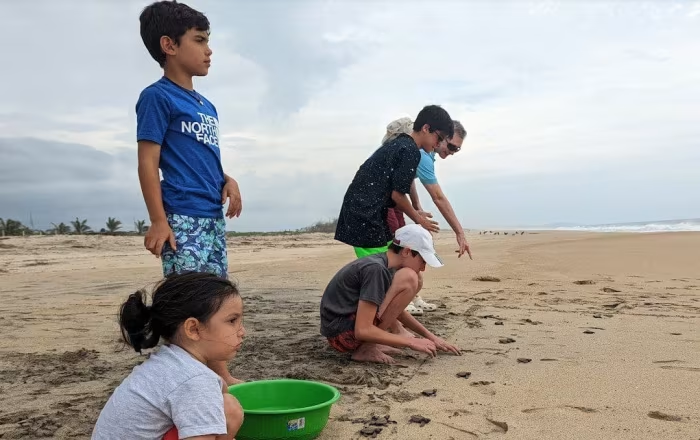
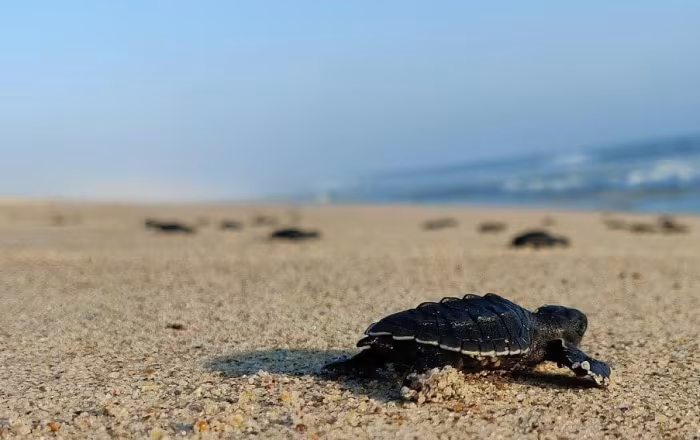
Hatchlings are placed on the sand a short distance from the water and crawl to the sea on their own. Nobody carries them into the waves. Scientists believe that crawl helps them imprint on the beach, and females may return to the same region to nest years later.
Clear rules, explained
No flash, no chasing, watch your feet, follow the guide. A good guide explains why each rule exists, so the group actually follows it.
Education is part of the visit
The best releases teach. You should leave knowing why the eggs were moved, what threatens turtles on this coast and what you can do about it once you're home.
The money supports the work
Turtle protection on the Oaxacan coast is largely community-led. Tourism can give that work income and visibility, and it's reasonable to ask how a program is funded.
Questions to ask before you book
- Where does the release take place, and who runs the hatchery? A clear answer with a real place and a real project is a good sign.
- When did the hatchlings emerge? Look for "today" or "last night", not "we keep them until the tour".
- What time is the release? Late afternoon or evening is what you want.
- Can you guarantee a number of turtles? A firm guarantee every single day is a warning sign. "Usually several, depending on what hatched" is the honest answer.
- Will we visit the hatchery and hear how the program works?

How our release near Puerto Escondido works
On the group release, we pick you up at your hotel or Airbnb at 4:30 PM and drive about 30 minutes south to the Playa Escobilla reserve, one of the most important olive ridley nesting beaches in the world. You walk through the protected hatchery with the conservation team, see nests at different stages of incubation and hear how eggs are collected and monitored. Then, at sunset, you release the hatchlings that emerged that day. Flash photography is not allowed, and you're back at your hotel by about 7:00 PM.
On the private release, your group has its own guide and hatchlings on a secluded beach at sunset, and part of the price goes directly to turtle protection. If you want to understand the whole process before you go, read how sea turtle conservation works near Puerto Escondido.
How to be a responsible visitor on the beach
- Switch your flash off before you arrive, and don't use a flashlight near the water.
- Keep your hands clean. Put on sunscreen early and avoid fresh sunscreen or insect repellent on your palms before you hold a hatchling.
- Hold them briefly and gently, close to the sand, and follow the guide's instructions on how and where to place them.
- Let them go at their own pace. Some sprint, some stop to rest. Both are normal.
- Skip the posed close-ups. The best photos are from sand level, behind the turtles, with the sunset ahead.
And after the tour
The release is a small part of what helps turtles. The bigger part is what happens all year: never buying turtle eggs or turtle products (illegal in Mexico), keeping beach lights low if you stay near a nesting beach, picking up plastic, and giving nesting females plenty of space if you're lucky enough to see one.
So, is it ethical? When it's done well, a turtle release is one of the few wildlife experiences where visitors directly support the people protecting a species. Ask the right questions, follow the rules on the sand, and you'll be part of that work rather than a distraction from it. To get to know the species you'll be releasing, read our guide to the olive ridley.