Visiting the Mexican Turtle Center in Mazunte

The Centro Mexicano de la Tortuga, the Mexican Turtle Center, is the most visited attraction in Mazunte and one of the few places on the Oaxacan coast where you can see adult sea turtles up close without being in the water. It is not a release site and it is not a big modern aquarium. It is a research and conservation center, run by Mexico's protected areas agency, with tanks and ponds you can walk through in about an hour. Go in knowing that, and it is a very good hour.
This guide covers the practical side: when it is open, what it costs, what you will see and how to fit it into a day trip from Puerto Escondido. If you want the background on why a turtle center ended up in Mazunte at all, read the story of sea turtles in Mazunte first.
Opening days and hours
The center is closed on Mondays and Tuesdays, which staff use for maintenance. This is the detail that catches most visitors out, because those are perfectly normal beach days for everyone else in town.
As of early 2026, the published schedule was:
- Wednesday to Saturday: 10:00 AM to 4:30 PM
- Sunday: 10:00 AM to about 2:30 PM (some listings say 2:00 PM)
- Monday and Tuesday: closed
The center has closed for longer periods in the past, for repairs after storms and during the pandemic, so check that it is open before you drive over, especially in the low season. Arriving in the morning is the better plan: it is cooler, the last entry can be earlier than the closing time, and you leave the afternoon free for the beach.

How much does it cost?
Entry is cheap. In 2026 the general ticket was listed at around $50 MXN per adult, with half price for students with ID and free entry for children under 12 and adults over 60. Prices move a little from year to year, and you will see older figures quoted online, so bring cash in small bills rather than counting on a card terminal.
What you see inside
The visit follows a path through the grounds by the beach. Expect a mix of indoor tanks and outdoor ponds rather than one big building.
Sea turtles
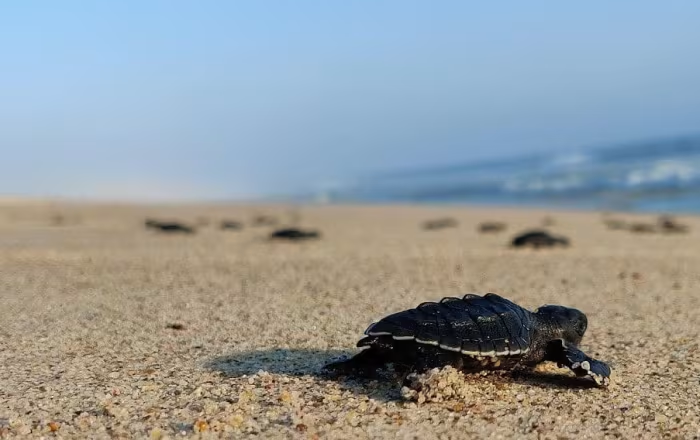
The main draw is the sea turtle tanks, where you can usually see several of the species that live in Mexican waters, such as olive ridleys and hawksbills, and sometimes others depending on which animals the center is holding at the time. Many are turtles that were injured, rescued or are part of research, so the line-up changes. It is the best chance most visitors get to see what an adult olive ridley actually looks like, a useful contrast with the palm-sized hatchlings you release on the beach. Our guide to sea turtle species in Oaxaca helps you tell them apart.
Freshwater and land turtles
A big part of the collection is less famous: freshwater turtles and tortoises from different parts of Mexico, in outdoor ponds and enclosures. Kids often like this section the most, because the animals are easy to spot and some are surprisingly large.
Information panels
Signs explain the life cycle of sea turtles, the threats they face and the conservation work on the coast. Most are in Spanish. If your Spanish is limited, a translation app on your phone does the job.
How long to plan for
Most people spend 45 minutes to an hour and a half inside. It is a small center, and it is a stop within a day in Mazunte rather than a full-day outing on its own.
Getting there from Puerto Escondido
Mazunte is east of Puerto Escondido along coastal Highway 200, roughly 65 km away. By car it usually takes about an hour to an hour and a quarter, depending on traffic and the many speed bumps. The center sits on the main road through Mazunte, near the beach, so it is hard to miss.
Without a car, the usual route is a bus or colectivo toward Pochutla, then a local camioneta or taxi down to the coast and Mazunte. It works, but it takes longer and it is worth asking locally for current departures. Many visitors simply stay a night or two in Mazunte or neighboring San Agustinillo and walk over.

Tips for a better visit
- Don't go on a Monday or Tuesday. Plan your Mazunte day around the closing days.
- Go early. The tanks are easier to see before the midday crowds and heat.
- No flash, no tapping on the glass. Some of these animals are recovering from injuries. Treat them the way you would treat hatchlings on the beach.
- Bring cash and water. Small bills for the ticket, and water for the walk around the grounds.
- Manage expectations. Tanks are simple and some areas may be under maintenance. The point is conservation and education, not a show.
Turtle Center or turtle release: which one?
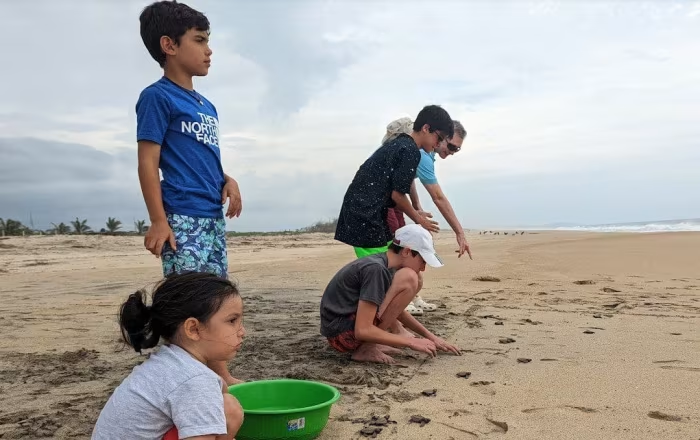
They are different experiences, and many visitors do both. At the Turtle Center you see adult and juvenile turtles in tanks and learn how they live. On a release, you stand on a nesting beach at sunset and send newborn olive ridleys toward the ocean, after visiting the hatchery where their eggs were incubated.
If you are staying in Puerto Escondido and only have one evening, the release is the closer and more personal of the two: hotel pickup at 4:30 PM, a 30-minute drive to Playa Escobilla and back at your hotel by about 7:00 PM.
Making a day of it in Mazunte
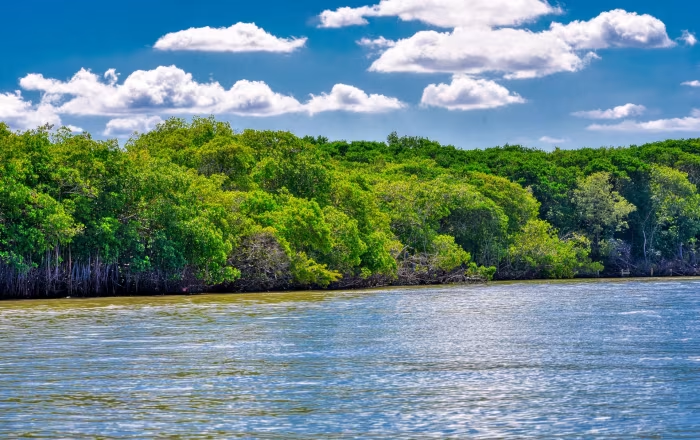
The center fits neatly into a day trip. A simple plan: Turtle Center in the morning, lunch and a swim at Mazunte's main beach, then the short walk up to Punta Cometa for the sunset. If you have more time, the mangrove lagoon at La Ventanilla, a few minutes west, is run by a local cooperative and is another good stop for wildlife.
The center is managed by CONANP, the same federal agency in charge of Mexico's protected natural areas. Your ticket is small, but visiting tells the people who run it that a live turtle is worth more than one sold on the black market, which is exactly the shift that saved the olive ridley on this coast.
Want to see how that protection works on the beach, from nest to release? Read how sea turtle conservation works near Puerto Escondido.