Is it illegal to touch sea turtles in Mexico? What the law says
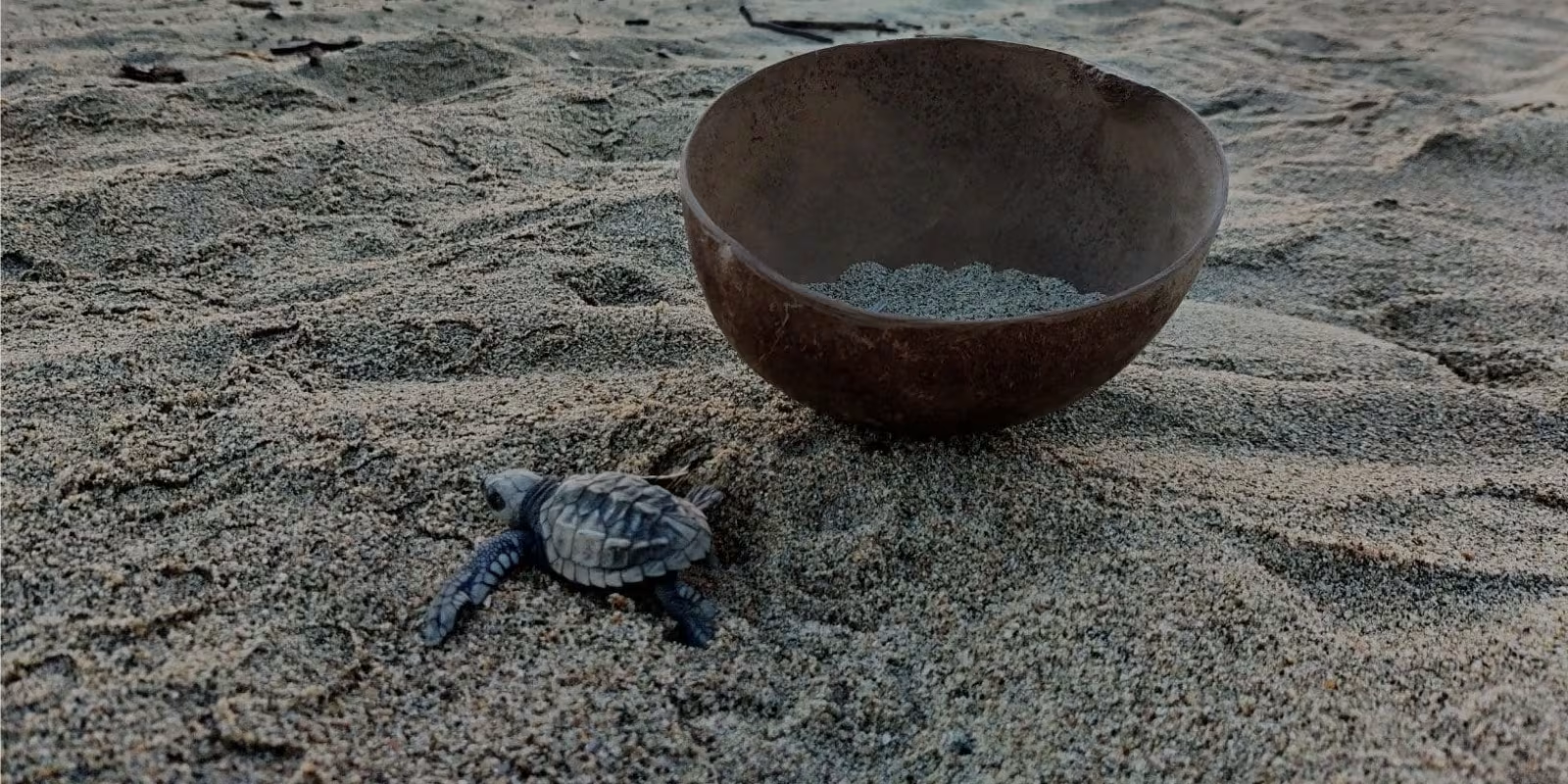
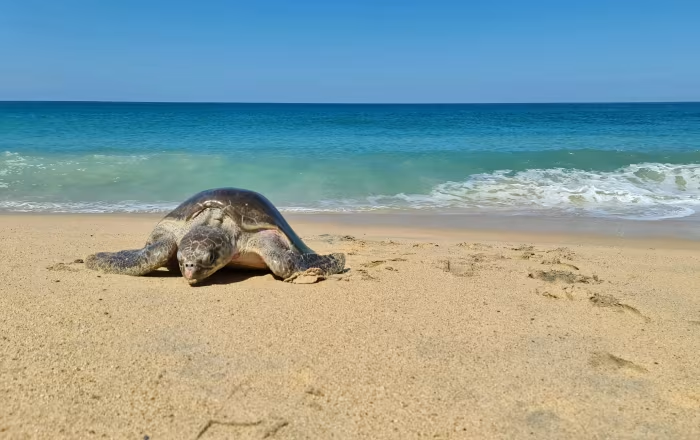
You are on a Oaxacan beach, a turtle is in front of you, and the question comes up: can I touch it? The short answer is that you shouldn't, and in some situations doing so can be against the law. The longer answer is a bit more nuanced, so here is what Mexican rules actually say, where they are clear, where they leave room for judgment, and what to do in practice. A caveat first: we run turtle tours, we are not lawyers, and this is a plain-language guide, not legal advice.
The legal framework in short
Every sea turtle species that visits Mexico is protected. The key points:
- The 1990 decree. On 31 May 1990 the federal government banned the capture, pursuit and harming of any sea turtle species in Mexican waters and the trade in their meat and eggs. Our story of how Mazunte went from slaughterhouse to conservation town shows what changed on the ground.
- NOM-059-SEMARNAT. This official standard lists species at risk. Sea turtles appear on it as endangered, which is why most activity involving them needs authorization.
- Wildlife law and the criminal code. Federal wildlife legislation and the federal penal code treat killing or capturing a sea turtle, collecting its eggs, or selling turtle products as an offense. Penalties can include prison and fines, not just a warning.
- Rules for nesting beaches. A separate official standard regulates how nesting beaches and nests are managed, who may move eggs, and what kind of tourism is allowed near them.
- International trade. Sea turtles are listed under CITES, so shell, leather or any turtle product cannot legally cross borders, and customs officers do seize them.
Enforcement belongs mostly to PROFEPA, the federal environmental prosecutor, with the navy and local conservation teams patrolling nesting beaches. You can read about the agency on the PROFEPA page on gob.mx.
So is touching a sea turtle illegal?
Honestly, it depends on the situation, and no single sentence in the law says "touching a turtle is a crime". What the rules prohibit is capturing, harassing, harming and handling these animals without authorization. A hand on a wild turtle can fall into any of those categories:
- Picking up or holding a wild turtle or hatchling without permission can be treated as capture or harassment.
- Chasing, cornering or riding a turtle, in the water or on the sand, is harassment, and it is the kind of thing that gets tourists reported.
- Touching a nesting female is the most harmful case. A mother who is disturbed can abandon the nest and return to the sea without laying.
- Taking a turtle, an egg or a shell home is clearly illegal, whatever the story that came with it.
Whether or not a brief touch would ever be punished, the practical rule is simple: if you are not part of an authorized program, don't touch. Local guides and beach patrols will tell you the same, and they are the people who decide whether a situation becomes a report.
Why the rule exists
This is not bureaucracy for its own sake. A hatchling carries a limited energy reserve for the swim out to sea, and every minute spent in someone's hands is energy it doesn't have later. Sunscreen, insect repellent and skin oils are harmful to a turtle's skin and eyes. Adult turtles can carry bacteria and parasites that you can pick up, and the reverse is true as well. And a nesting female stressed by people may not lay at all, which is a bigger loss than it sounds, because most hatchlings never reach adulthood. We go through the numbers in how many baby sea turtles survive.
What about the turtle release?
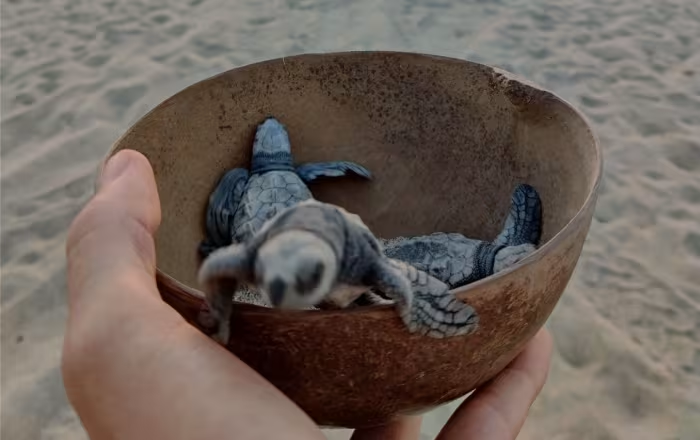
That is a fair question, because holding a hatchling on a tour looks like the very thing we just said not to do. The difference is who is in charge and why. In a proper release the eggs were rescued by a conservation team, incubated in a protected hatchery and are handled under the supervision of trained guides, who tell you how to hold a hatchling and when to let it go. Visitors don't pick turtles off the beach on their own. If you want to judge any operator, ask who runs the hatchery, how the hatchlings are chosen and whether the program works with the local conservation teams. We explain our view, including the criticisms, in is turtle release ethical?
What to do if you meet a turtle
On the beach
- Keep your distance. If you see a female coming ashore at night, stay well back and behind her, keep voices low and watch quietly.
- No lights and no flash. Lights disorient turtles. Use no flashlight, no phone light and no flash photography. Our photography tips explain how to get good shots without any of them.
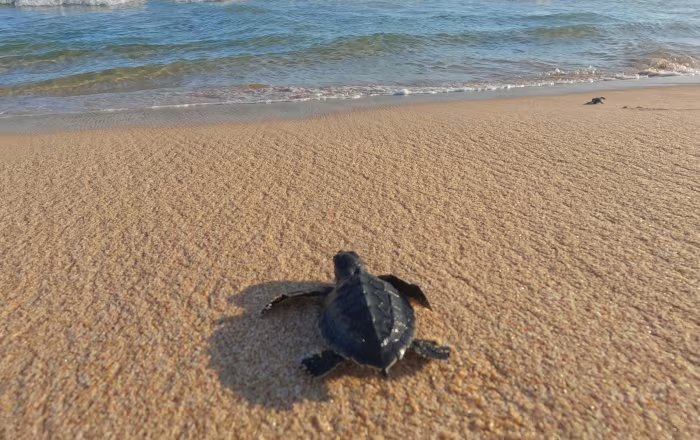
- Don't pick up hatchlings you find. If one is lost, crawling the wrong way or stranded, contact a local conservation camp or your hotel and let people with authorization handle it.
- Don't dig into nests. And don't buy eggs, ever. Turtle eggs are still offered quietly in some places, and the demand is what keeps poaching alive.
In the water
If you are snorkeling or diving and a turtle appears, float and watch. Don't touch, grab, chase or block its way to the surface, because turtles need to breathe air. Nobody should ride them, whatever you may have seen online. We cover this in more detail in our guide to swimming with sea turtles near Puerto Escondido.
Souvenirs and products
Skip anything made of turtle shell, leather or meat, and avoid jewelry or polished pieces described as "carey" or "tortoise shell". It is illegal to sell and illegal to export, and even if a seller tells you otherwise, you are the one who will have the problem at customs. Turtle eggs and meat on a menu are illegal too, and a polite refusal is all you need to say.
How to report something
If you see someone taking eggs, harassing a nesting female or selling turtle products, don't confront them. Note the place, time and a description, take a photo from a distance if it is safe, and report it to PROFEPA or to the local conservation group working on that beach. Many of the people protecting these nests are community volunteers, and a clear report helps them.
Quick answers
Can I touch a baby turtle on the beach?
Not unless you are doing it as part of an authorized release or program. Wild hatchlings should be left to reach the sea on their own.
Can I take a photo with a turtle?
You can photograph a turtle from a distance, without flash. Holding one for a photo, in or out of the water, is the sort of thing the rules are meant to stop.
Is it illegal to buy turtle eggs?
Yes. Trading in turtle eggs is illegal in Mexico, and eating them doesn't have any proven benefits. We look at the most common beliefs in our post on sea turtle myths.
What else can I do to help?
Plenty. Our guide on how travelers can help sea turtles lists small habits that make a real difference, and the pressures turtles face are covered in threats to sea turtles in Oaxaca.