Swimming with sea turtles near Puerto Escondido: where and how to do it right
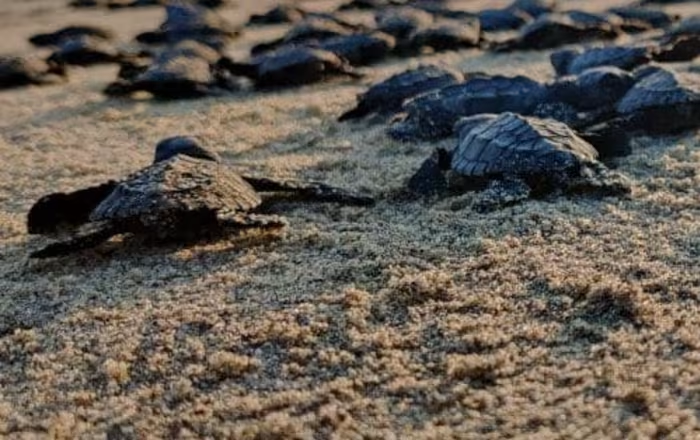
Most people who come to Puerto Escondido for the turtles first meet them on the sand, as hatchlings heading for the Pacific. Sooner or later, many ask the next question: can I get in the water with an adult? The honest answer is yes, sometimes, with some luck and the right expectations. This coast is not a resort lagoon where the same turtle grazes in front of the same snorkelers every morning. It's open Pacific, and the turtles here are wild animals passing through. Here is where encounters actually happen, when your chances are better, and how to behave so the turtle stays relaxed and you stay safe.
Which turtles you might meet in the water
By far the most common is the olive ridley, the same species that nests by the thousands at Playa Escobilla. Adults spend much of their time offshore, and it's common to see them floating at the surface, sometimes with a seabird perched on the shell. During the nesting season, roughly June to January, you may also spot pairs mating at the surface a little way out from the beaches.
Green turtles, dark enough here that locals call them tortuga prieta, turn up more often near rocky points, where they feed on algae. Hawksbills are rare on this side of Mexico, and a leatherback in the water is a once-in-a-lifetime sighting. If you want to put a name to what you see, our guide to the sea turtle species of Oaxaca explains how to tell them apart.
Where to swim with turtles near Puerto Escondido
From a boat, offshore
Your best chance by far is a morning boat trip out of the main bay. Captains on the dolphin and wildlife tours know where turtles tend to float, and when the sea is calm some operators let you slip in with mask and snorkel near a turtle at the surface. Ask before you book whether swimming is part of the trip; not every tour includes it, and the decision on the day belongs to the captain. Expect deep, blue water with no bottom in sight, which is wonderful if you're a confident swimmer and unsettling if you're not. A life jacket is never a bad idea.
Sheltered coves in town
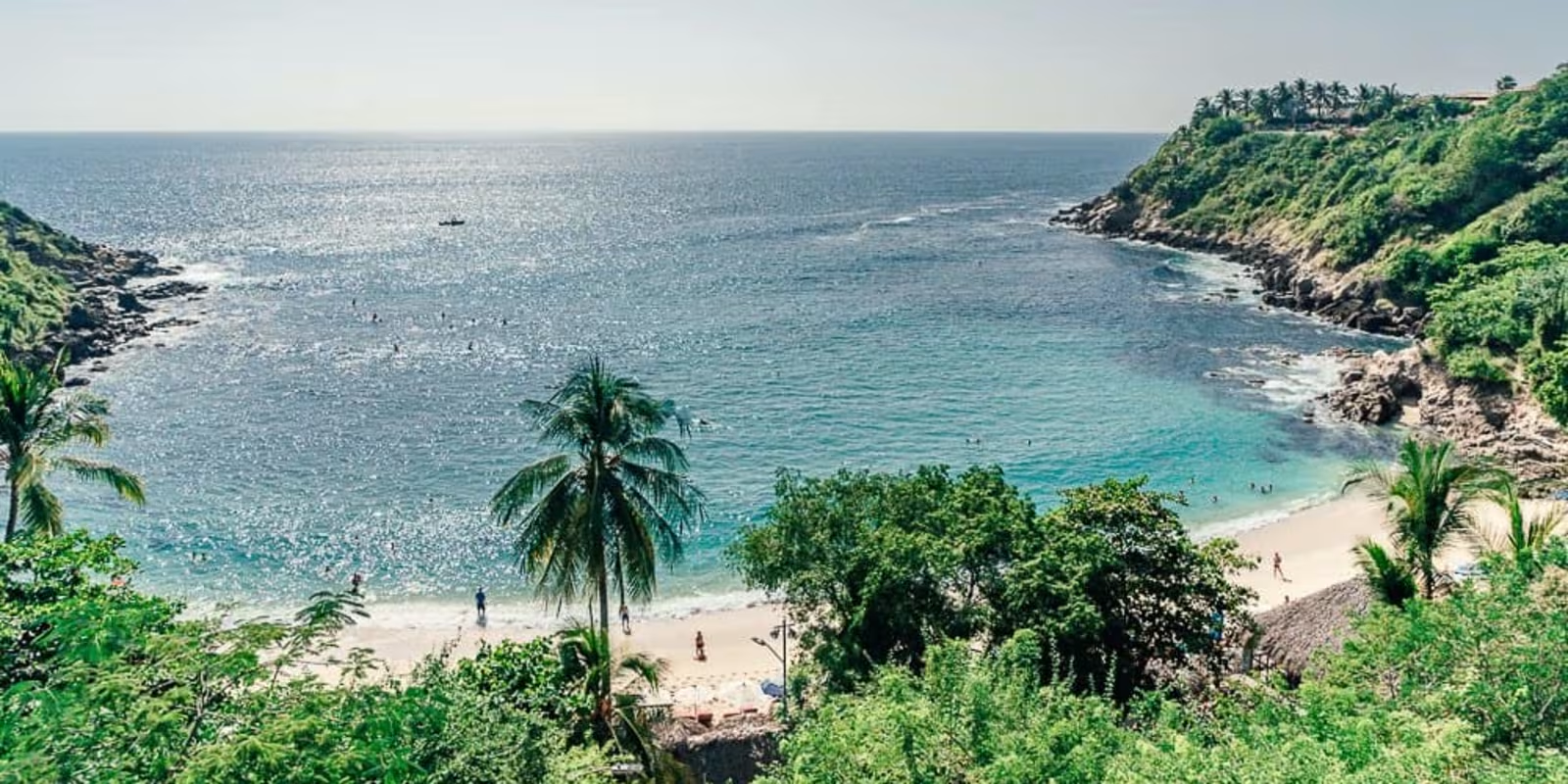
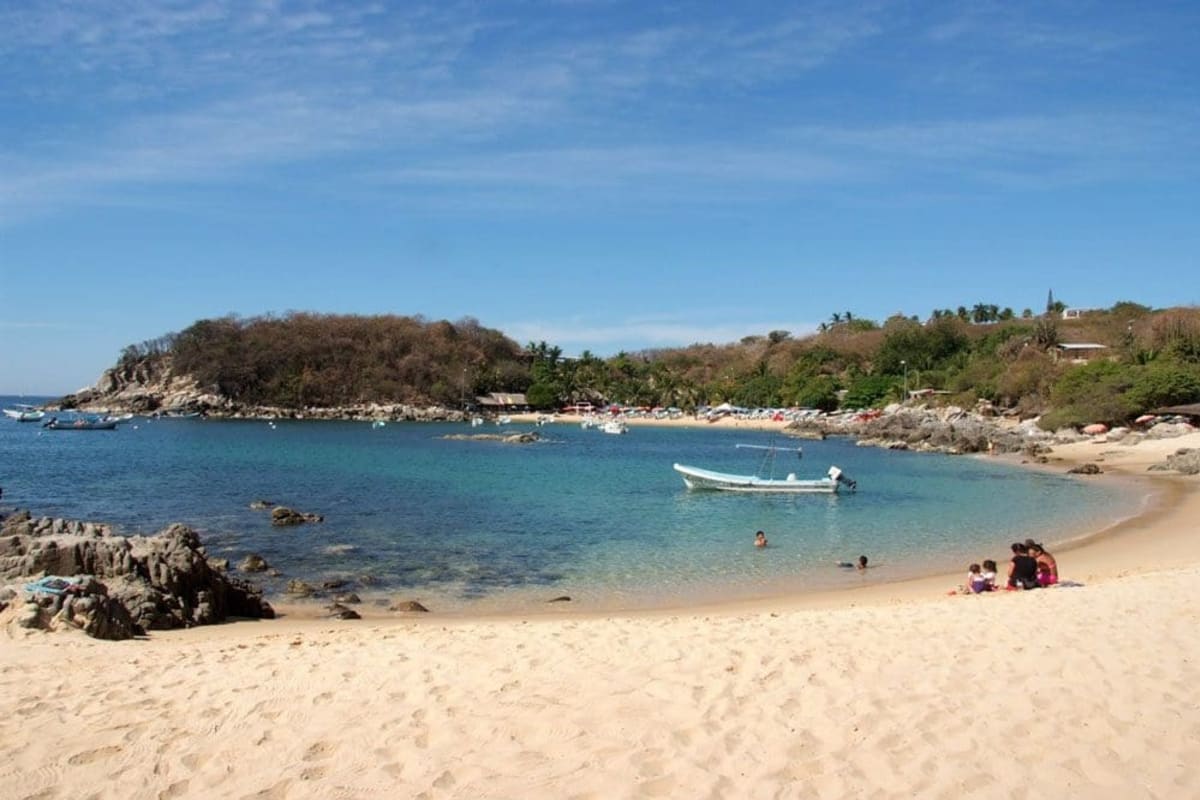
Puerto Angelito, Manzanillo and Carrizalillo are the calm, protected coves where people snorkel in town. They have small rocky reefs with plenty of fish, and a turtle does pass by now and then, especially near the rocks at the edges. Don't plan a morning around it; treat a turtle there as a bonus. Stay out of the water at Zicatela and the open beaches: the surf and currents there are for experienced surfers, not snorkelers.
Further down the coast
Around Puerto Ángel, Estacahuite and the bays near Mazunte and San Agustinillo also have rocky reefs and local boat trips that look for turtles, often combined with a visit to the turtle center in Mazunte. It makes a full day out from Puerto Escondido, so it's best combined with a night or two on that stretch of coast.
When is the best time?
Turtles live off this coast all year, so there is no closed season for seeing them. What changes is the water. In the dry months, roughly November to May, the sea is usually clearer and calmer in the mornings. In the rainy season, river runoff and swell can cloud the water, but this is also when olive ridleys gather offshore to mate and nest, so surface sightings from a boat can be excellent. Whatever the month, go early: the wind tends to pick up toward midday and visibility drops with it. For the full calendar of nesting and hatching, see our turtle season month by month.
How to swim with a sea turtle the right way
A turtle at the surface is usually resting, breathing or warming up. Chasing it, crowding it or touching it forces it to dive and burn energy it needs. These habits keep the encounter good for both of you:
- Keep your distance. Stay at least a few meters away, and more if the turtle starts to change direction or dive. Let it decide how close it comes.
- Never touch, ride, hold or feed a turtle. Not even a light pat on the shell. All sea turtles in Mexico are protected species, and handling or harassing them can bring legal trouble as well as stress the animal.
- Approach from the side, never from above or in front. Don't block its path to the surface: a turtle that can't breathe when it wants to will panic.
- Move slowly and quietly. Keep your fins below the surface, avoid splashing and don't dive down on top of it. A calm swimmer is more likely to get a longer look.
- Small groups only. If a dozen people jump in around one turtle, it leaves. Take turns in the water.
- Boats slow down. A good captain idles or cuts the engine well before reaching a turtle and never drives through a group of them.
- No flash, no selfie sticks in its face. Shoot from the side and from a distance, and enjoy at least some of the encounter without a screen.
Choose your sunscreen with the reef in mind too: a mineral sunscreen applied well before you get in, or a rash guard, means less oil and chemicals in the water. For more everyday ways to help, read how travelers can help sea turtles. If you want official background, NOAA's marine life viewing guidelines follow the same principles.
Is it safe to swim with sea turtles?
Turtles themselves are not a danger to swimmers; they avoid people when they can. The real risks here are the ocean: swell, currents and the distance from shore on a boat trip. Swim only where the operator or local lifeguards say it's calm, wear a life jacket if you're unsure of yourself, and never swim alone off the open beaches.
Can you swim with the hatchlings on the release?
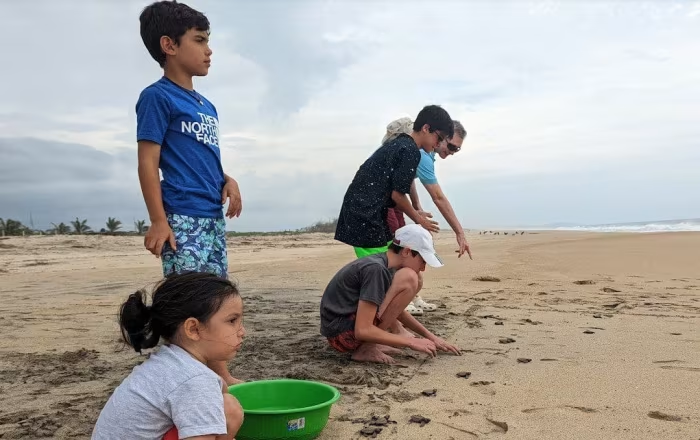
No, and you wouldn't want to. On the release you stay on the sand and let the hatchlings crawl to the water by themselves; the crawl and the first swim through the surf are part of how they orient. Following them into the waves would only put them, and you, at risk. The release and a swim with an adult turtle are two different experiences that pair well on the same trip: one on the beach at sunset, the other on calm water in the morning.
A realistic plan
If seeing a turtle in the water matters to you, book a calm-morning boat trip early in your stay so you have spare days if the sea is rough, snorkel the sheltered coves whenever the water is clear, and keep the sunset release for an evening when you're on land. Before you go, our guide to the olive ridley will tell you a lot about the turtle you're most likely to meet out there.