Releasing baby turtles with kids: a family guide
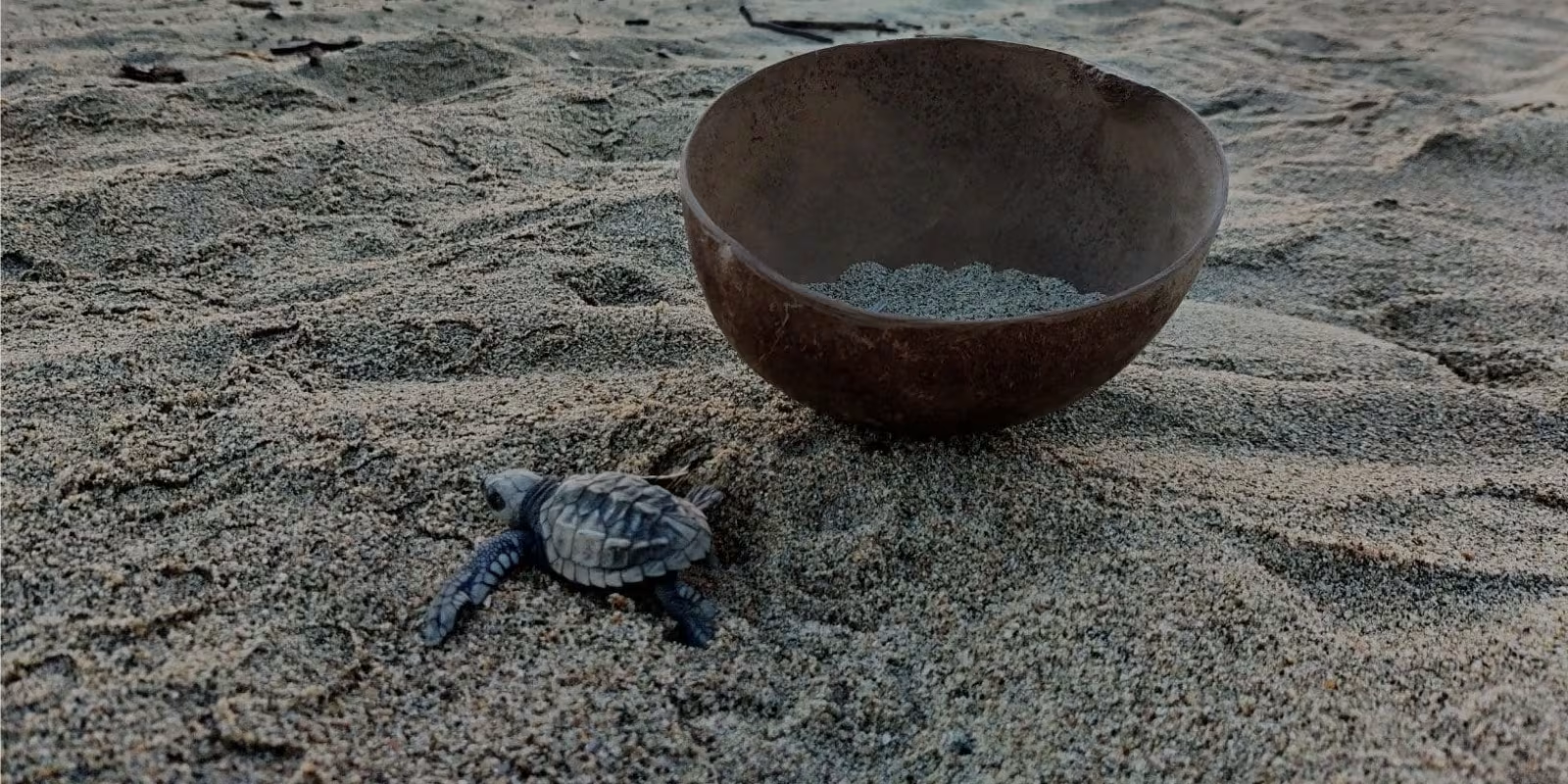
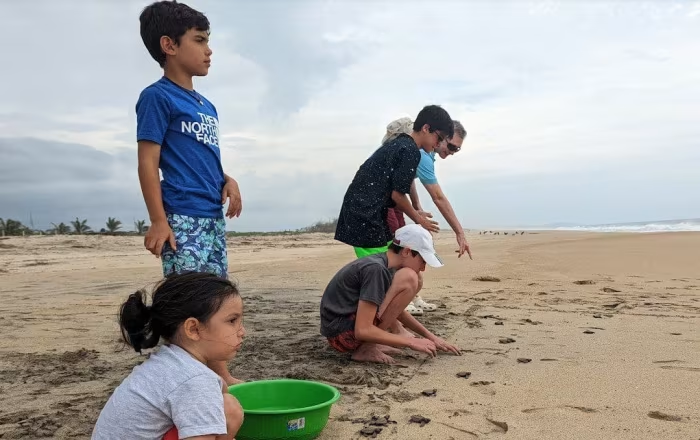
Ask parents what their children remembered most about a holiday in Puerto Escondido and the turtle release comes up again and again. It's short, it happens at an hour that works for families, and it gives kids something they almost never get on a trip: a real job to do. This guide covers how to get the most out of a turtle release with kids, from the drive to the beach to the questions they'll ask on the way home.
Why the turtle release works so well for families
Most nature tours ask children to be patient and quiet while adults look at something far away. This one is the opposite. The animals are right there, palm-sized, and the kids are part of what happens. A few things make it especially family-friendly:
- It's short. The whole outing lasts about 2.5 hours, door to door. We pick you up at your hotel or Airbnb at 4:30 PM and you're back by about 7:00 PM, in time for dinner.
- The drive is easy. Playa Escobilla is about 30 minutes south of Puerto Escondido along the coast, not long enough for anyone to get restless.
- There's something to learn before the big moment. At the hatchery, the guide shows nests at different stages of incubation and explains the turtle's life cycle in a way children understand.
- It ends at sunset. The light is soft, the heat has dropped and the beach is at its most beautiful.

What age is best?
There's no single right age, but it helps to think about what each stage gets out of it.
Toddlers and preschoolers
Little ones love the sand, the waves and the tiny turtles, but they don't yet have the fine control to hold a hatchling gently. Plan for a parent to hold the turtle with the child, or let the child watch closely while you place it on the sand. Expect their attention to drift to the waves after a few minutes, and that's fine.
Ages 5 to 10
This is the sweet spot. Kids this age can follow simple rules, ask a hundred questions and feel genuinely proud of "their" turtle making it to the water. Many of them leave wanting to talk about turtles for the rest of the trip.
Tweens and teenagers
Older kids tend to connect with the conservation side: why eggs are moved to a hatchery, what threatens turtles and what people on this coast are doing about it. Give them the camera (with the flash off) and a role, and they'll be fully in.
How to prepare your kids before the tour
A few minutes of preparation the day before makes a real difference. Children who know what to expect are calmer on the beach and enjoy it more.
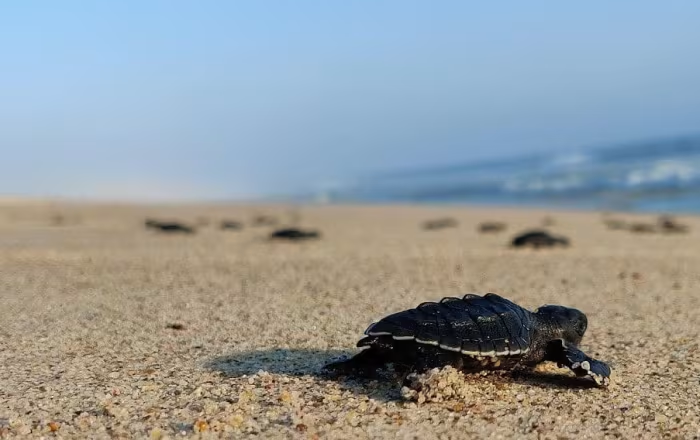
- Explain how small the turtles are. A newly hatched olive ridley fits in the palm of a child's hand. Have them cup their hands and imagine holding something very light and very fragile.
- Teach the three beach rules. Gentle hands, no chasing the turtles into the sea, and watch where you step. Saying them out loud in the van turns them into a game.
- Explain why there's no flash. Bright lights confuse hatchlings, which find the ocean by moving toward the brightest horizon. Kids usually become the strictest flash police in the group once they know this.
- Tell them they'll have a job. They aren't just watching. They are helping a protected baby animal take its first walk to the ocean.
What happens on the beach
At the hatchery, the conservation team and your guide explain how eggs are collected from the beach and protected until they hatch. Then the hatchlings are handed out, and everyone walks toward the waterline. The guide shows you where to place them on the sand, and the turtles crawl the rest of the way on their own. That short crawl matters, so let them do it, even if it takes a minute or two and the kids are desperate to help.
How many turtles each person releases depends on what hatched that day, but you can usually release several. If you have more than one child, it's worth agreeing beforehand that everyone gets a turn, so nobody feels left out when the moment comes.
The big questions kids ask (and honest answers)
Children ask good questions, and some of them are hard. These come up on almost every release.
"Will my turtle survive?"
Be honest but kind. Most hatchlings don't reach adulthood; the ocean is full of predators and dangers. That's exactly why the program protects the eggs and why every turtle that makes it to the water counts. You can tell them their turtle has a much better start than it would have had on its own.
"Where is the mom?"
Mother turtles come ashore at night, dig a nest, lay their eggs and return to the ocean. They never meet their babies. The hatchlings are born knowing what to do: find the sea and swim.
"Will it come back?"
If it's a female and she survives, there's a good chance she'll return to nest on this same stretch of coast years from now, when she's an adult. Kids love the idea that "their" turtle might lay eggs here one day.
If your children want to go deeper, our guide to the olive ridley, the turtle of Puerto Escondido is easy to read together before the trip.

What to pack for a family release
- Sandals and comfortable beach clothes for everyone.
- Sunscreen and hats: the sun is still strong in the late afternoon.
- A light jacket or sweatshirt per child, since the evening breeze off the ocean can feel cool once the sun goes down.
- Water and a small snack, especially for younger kids.
- A camera or phone with the flash switched off before you arrive.
- Wet wipes or a small towel for sandy hands and feet before getting back in the van.
Group or private release for families?
Both options include hotel pickup, the drive, a guide and the release itself, and both need at least 2 participants.
- Group release ($800 MXN per person). Takes place at the Playa Escobilla reserve and includes the hatchery visit. Great for curious kids who want to see the nests and hear how the program works.
- Private release ($1,500 MXN per person). Your family gets its own guide and hatchlings on a secluded, empty beach at sunset, and part of the price funds turtle protection. A good choice if your children are very young, get overwhelmed in crowds, or you simply want the moment to yourselves.
For details like the minimum age or child prices on a specific date, check the booking page or message us on WhatsApp before you book.
A memory that keeps going
The release itself lasts only a few minutes, but the conversation it starts can last the whole trip. Ask your kids to draw their turtle that night, or to tell a grandparent the story over a video call. That's when you'll realize how much they took in. For more practical advice on the evening itself, read our 8 tips for families and first-timers.